Fugace Aurore
Art Paris 2026
9 – 12 April
Artists
About the exhibition
Fugace Aurore
The crumpled water lilies sigh around her;
She sometimes stirs, in a sleeping alder,
Some nest from which escapes a little shiver of wings:
A mysterious song falls from the golden stars.
Ophélie, Arthur Rimbaud
There is always, at the break of day, even before the sun dares to make its appearance on the horizon, a moment suspended in time. A fragile, almost unreal instant, so brief that it might go unnoticed by anyone who does not take the time to observe it. It is a profoundly magical moment, during which the birds already seem to be hopping with impatience in the still-dark branches, as if they sensed the imminent arrival of light. Nature, for its part, seems to stretch slowly, in a silent and peaceful movement, as if to better emerge from the torpor of the night. The air is still cool, the shadows linger, and little by little one senses the world catching its breath.
In this nascent half-light, everything seems to be transforming. The contours of the landscape gradually come into focus, colours awaken, and each element gradually finds its place in the grand orchestration of life. A vast and joyful invisible theatre raises its curtain: the actors of nature, still discreet, enter the stage one by one. The wildlife comes to life, the flora quivers with dew, and the entire landscape begins to vibrate with a new energy. The seas and oceans catch the first glimmers of the sky, the mountains are adorned with golden hues that herald the promise of a new morning.
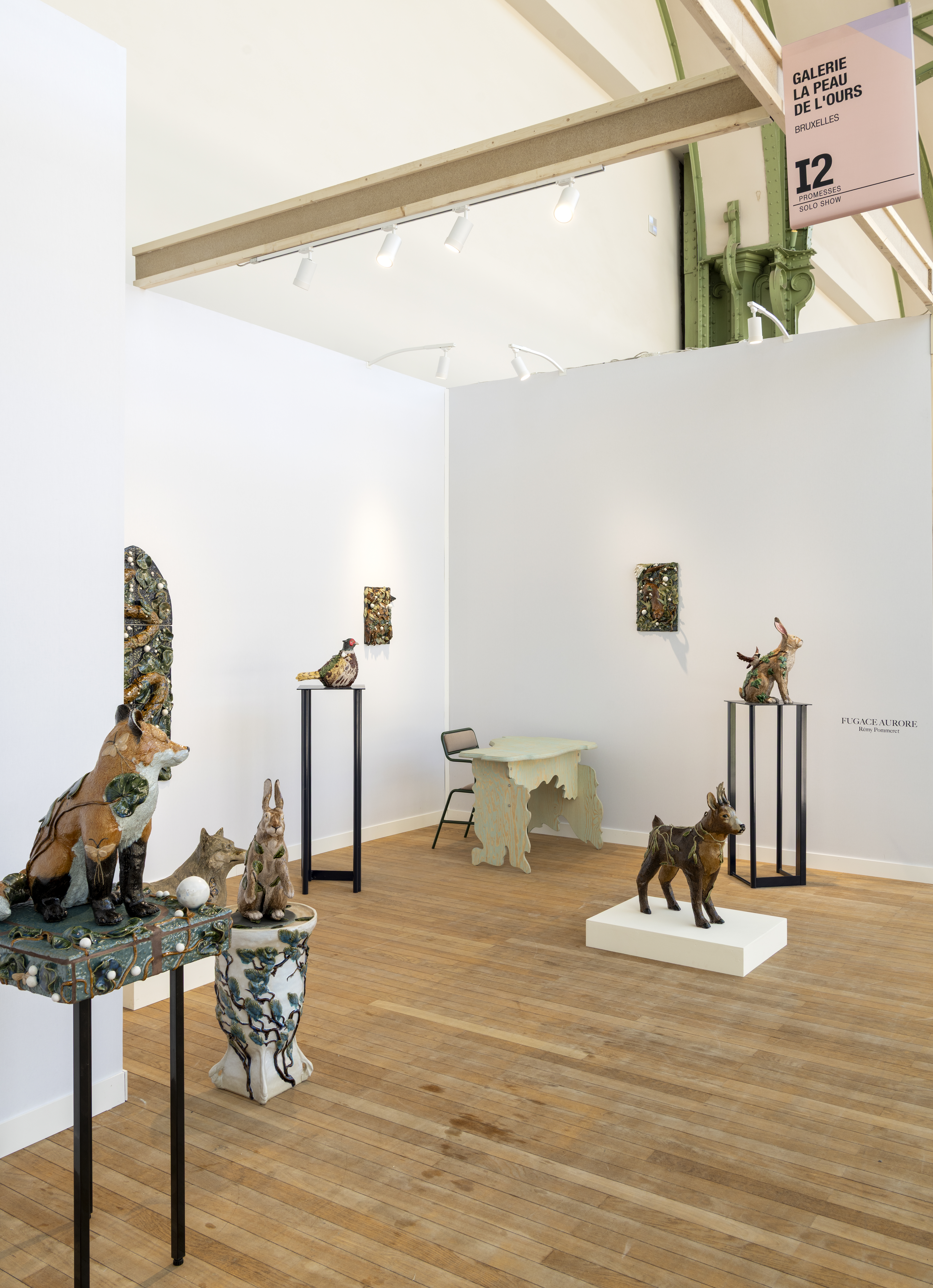
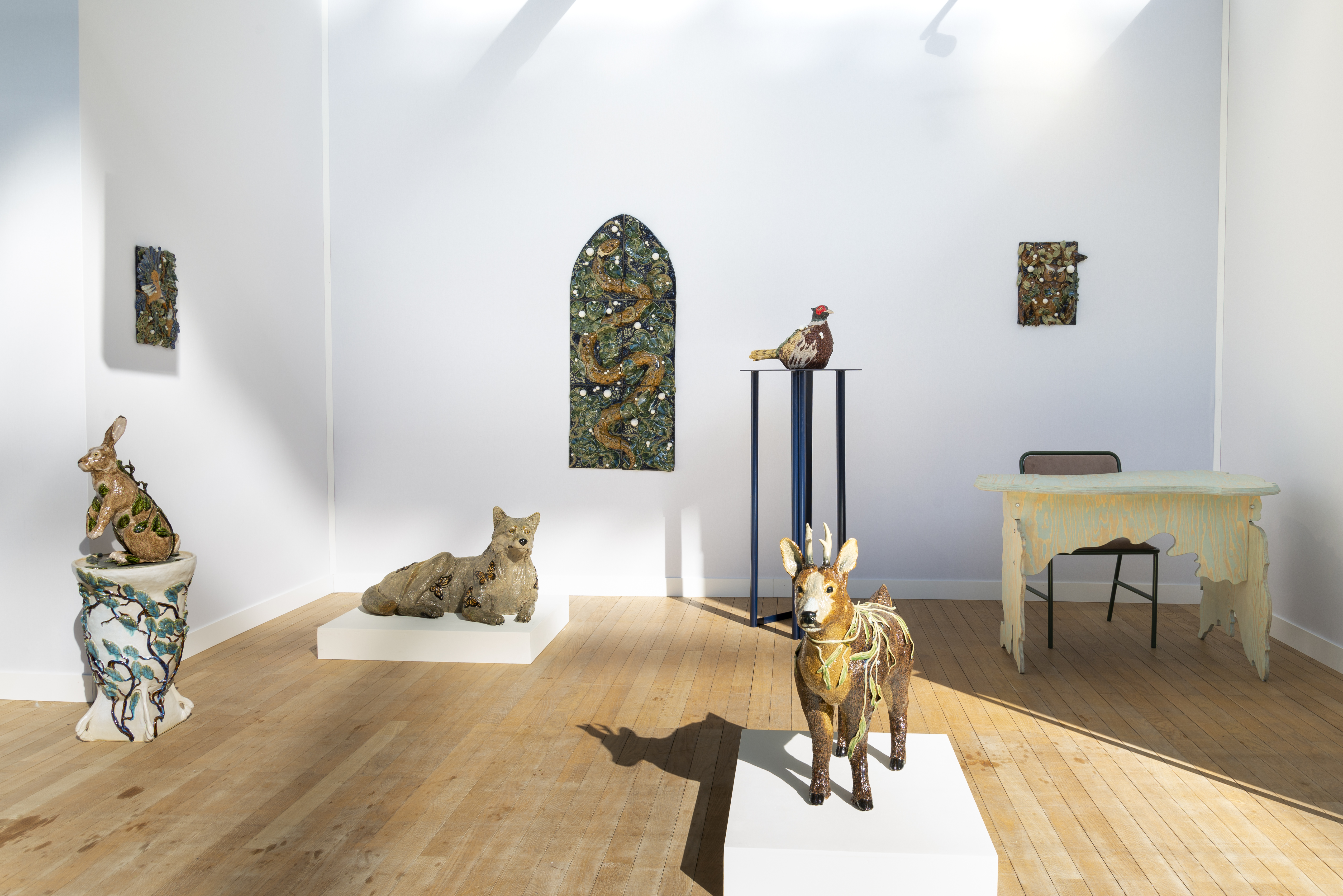
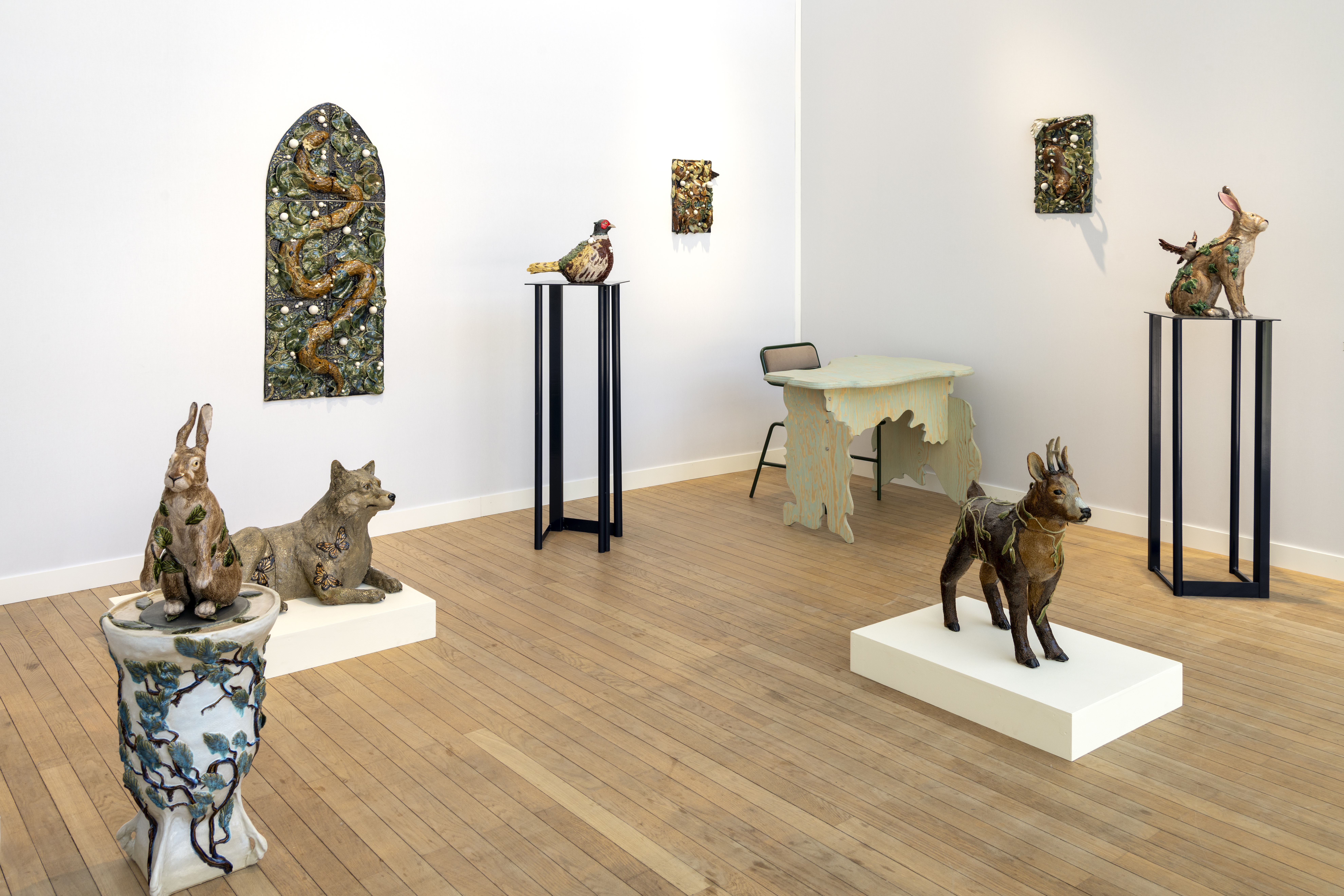
It is precisely this fragile, contemplative moment, this unique light, bathed in both gentleness and a subtle sense of the fantastical, that Rémy Pommeret has chosen to explore through his new animal fantasies. Fascinated by this subtle boundary between dream and reality, the artist strives to capture that moment when forms and silhouettes seem to emerge from a natural world still steeped in mystery. Drawing inspiration today from the Pre-Raphaelite aesthetic and particularly from John Everett Millais’s famous Ophelia, held at Tate Britain, he composes, with fine humour and a touch of irreverence, a world where animals and plants respond to and intertwine with one another in a harmony that is both dreamlike and surreal.
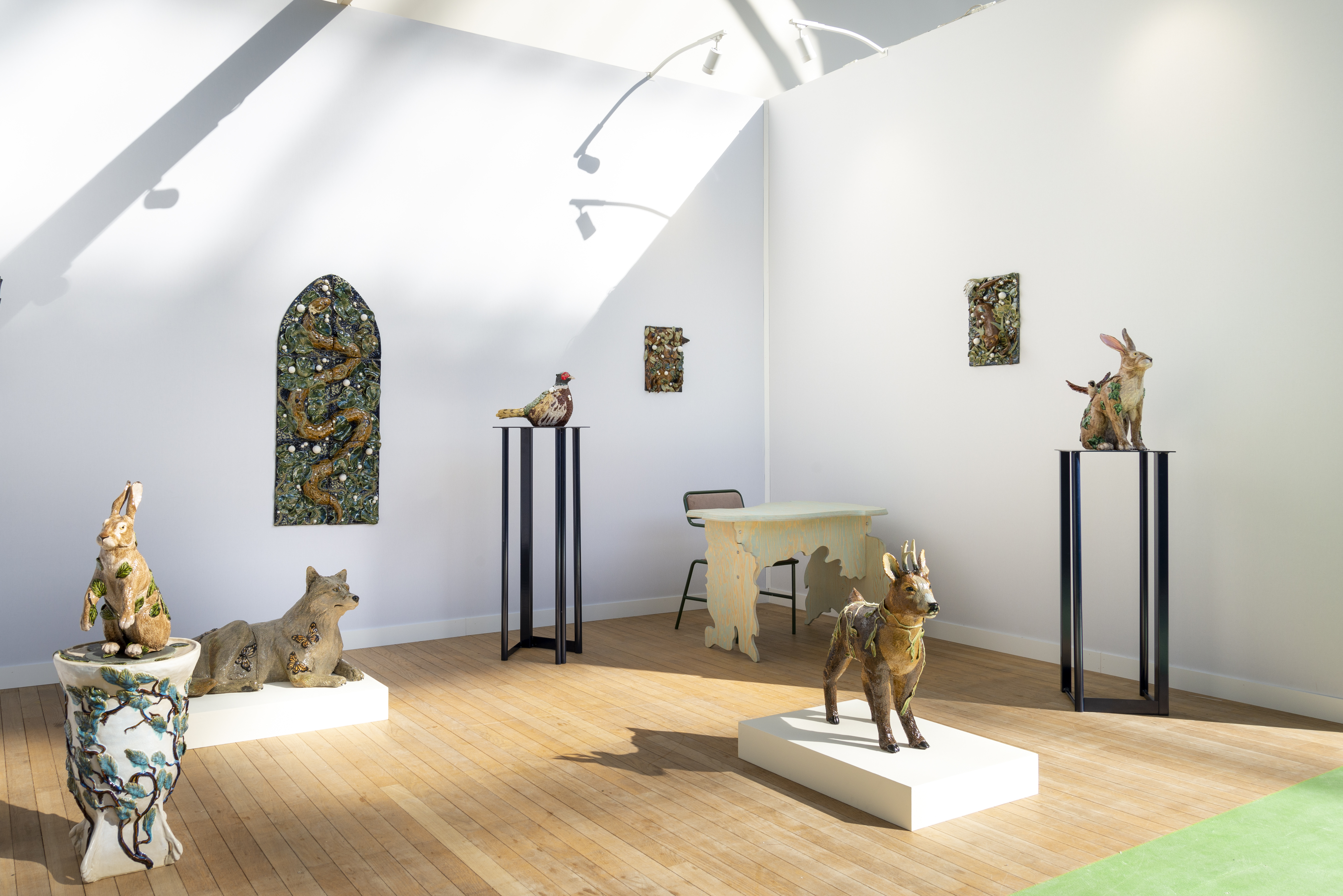
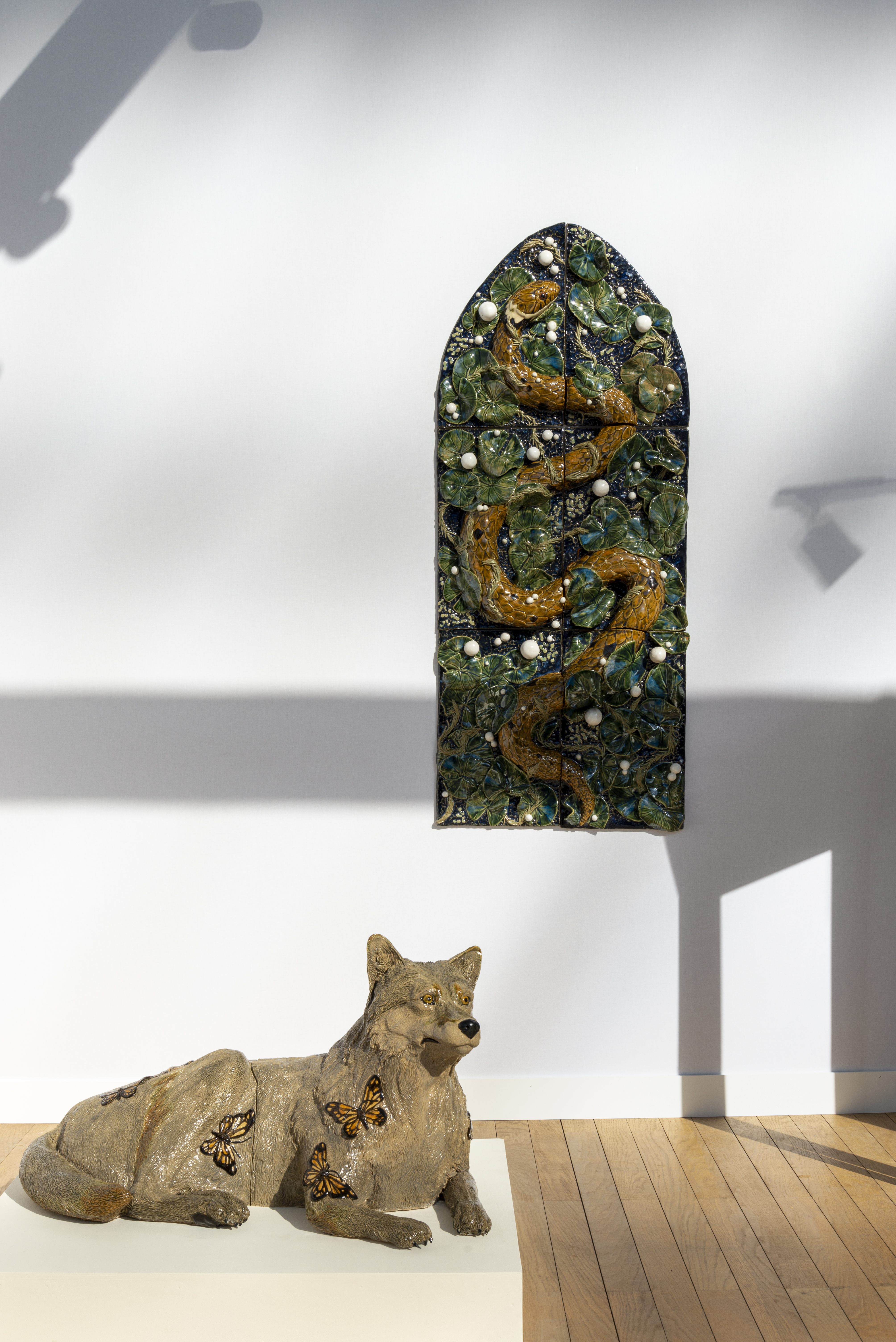
In this new bestiary, the animal figures no longer merely inhabit the setting: they blend into it, mingle with it and sometimes even merge with it. The lush, poetic vegetation thus becomes far more than a mere backdrop, transforming into a true protagonist, fully participating in the visual narrative. The abundant foliage intertwines, the stems cross, and the eye sometimes struggles to distinguish the boundary between the animal presence and the exuberance of the plants. Which, of the snake or the green foliage that encircles it, truly dominates the scene? The ambiguity remains, feeding the enchanted, even fantastical dimension of these compositions.
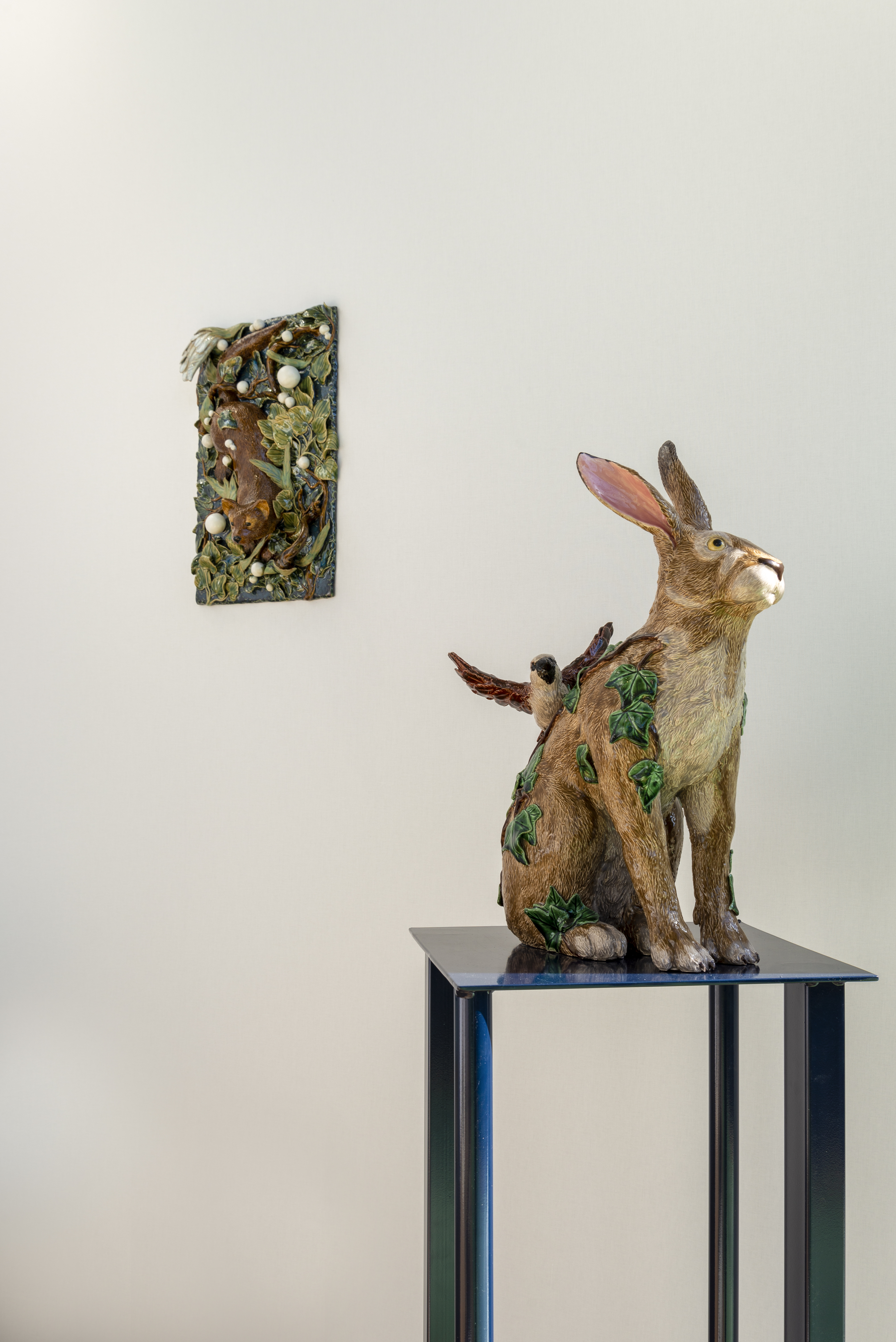
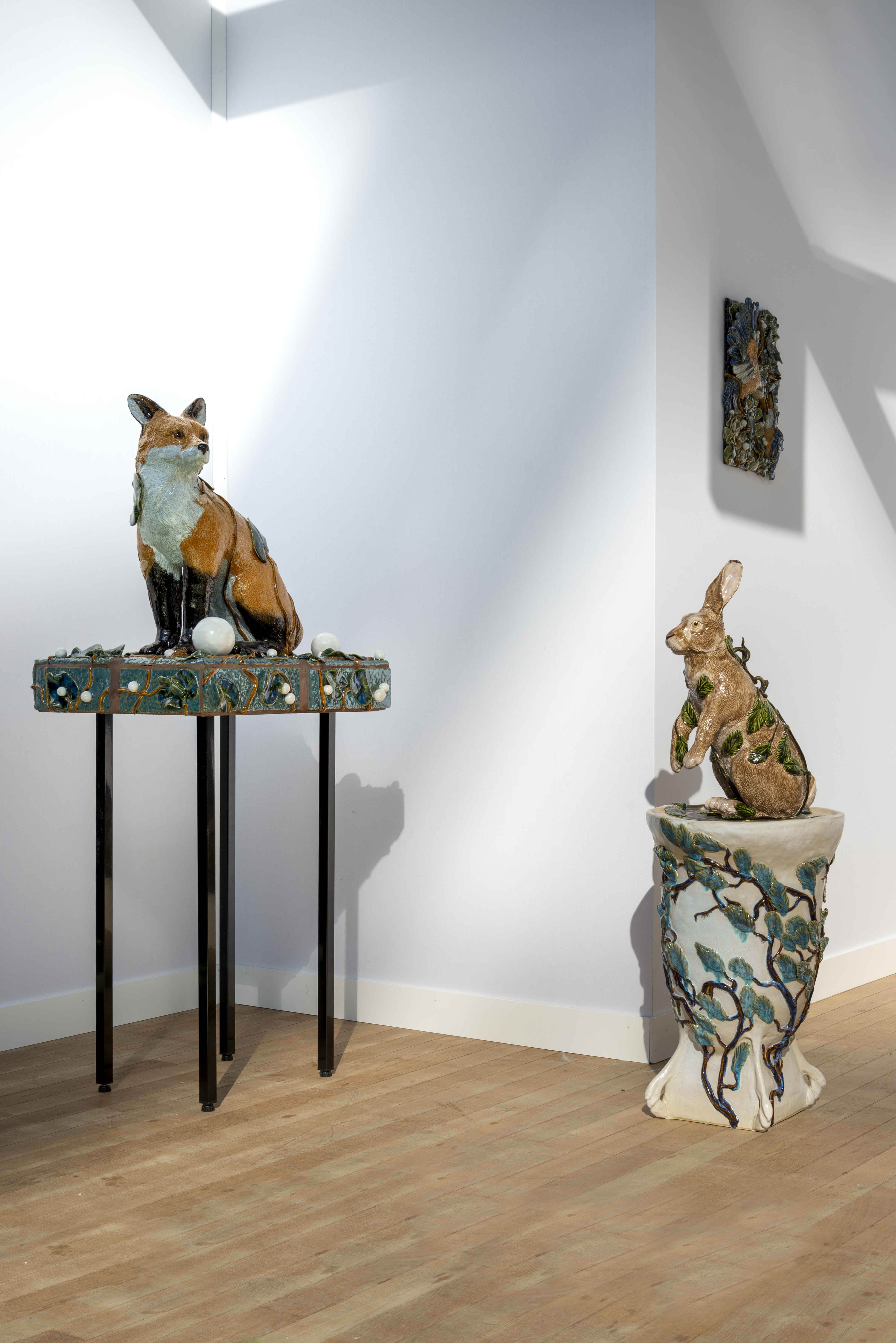
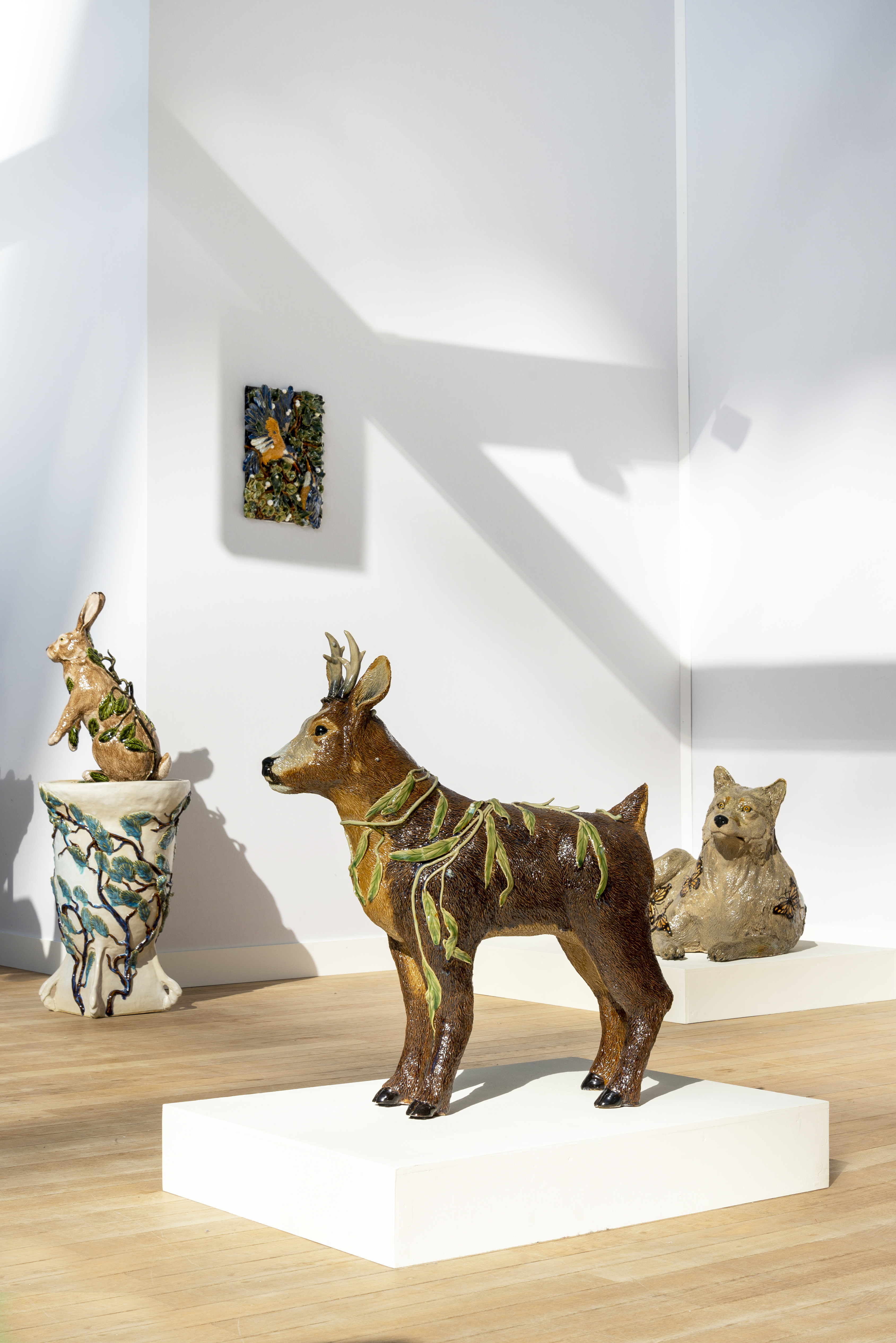
Here, a fox seems to walk with astonishing lightness across the surface of a still pool of water, as if the boundary between the solid world and the liquid world had momentarily vanished. The weasel, quietly going about its business, encounters the agile hare and the elegant pheasant, prince of the place, each a character in their own right within this silent tale. Further on, a wolf and a roe deer seem, with an almost conspiratorial mischief, to whisper the rest of this story to us. Little by little, a discreet narrative takes shape, which has all the hallmarks of a delicate fable, escaped from the yellowed pages of an old picture book or a long-forgotten tale.
For the first time, the artist has chosen to abandon earthenware, a material he had previously favoured, in favour of stoneware. This change undoubtedly allows him to refine the modelling of his forms even further and to explore the richness of detail with greater precision; stoneware also offers him a new field of experimentation with glazes and colour nuances, paving the way for more subtle variations and novel surface effects. The lustre, a hallmark of his work, nevertheless remains at the heart of this artistic exploration and continues to play an essential role in the perception of the works, bringing the forms to life and delicately revealing the complexity of the reliefs.
Thus, Rémy Pommeret’s sculptures do not merely depict living things, but extend their momentum, capturing within the material that fragile moment when the world, still shrouded in silence, gently reveals itself in the light of day. A fleeting dawn, certainly, but one which, for his third exhibition with La peau de l’ours, confirms the undeniable talent of this very young artist who has become a key figure on the contemporary ceramics scene!
Jean-Marc Dimanche
Curator