Stacked
Threshold
Currently on view
11 January – 21 February
Artists
Danny Cremers
Marie Pic
About the exhibition
For its 2026 Season Opening ExhibitionOn the occasion of ceramic brussels, La peau de l’ours presents for its first exhibition of 2026 two solo exhibitions by Marie Pic and Danny Cremers.
Both exhibitions are presented alongside the fair, as both artists are Laureate for the ceramic brussels Art Prize, highlighting their distinct yet complementary approaches to contemporary ceramic practice.
Stacked
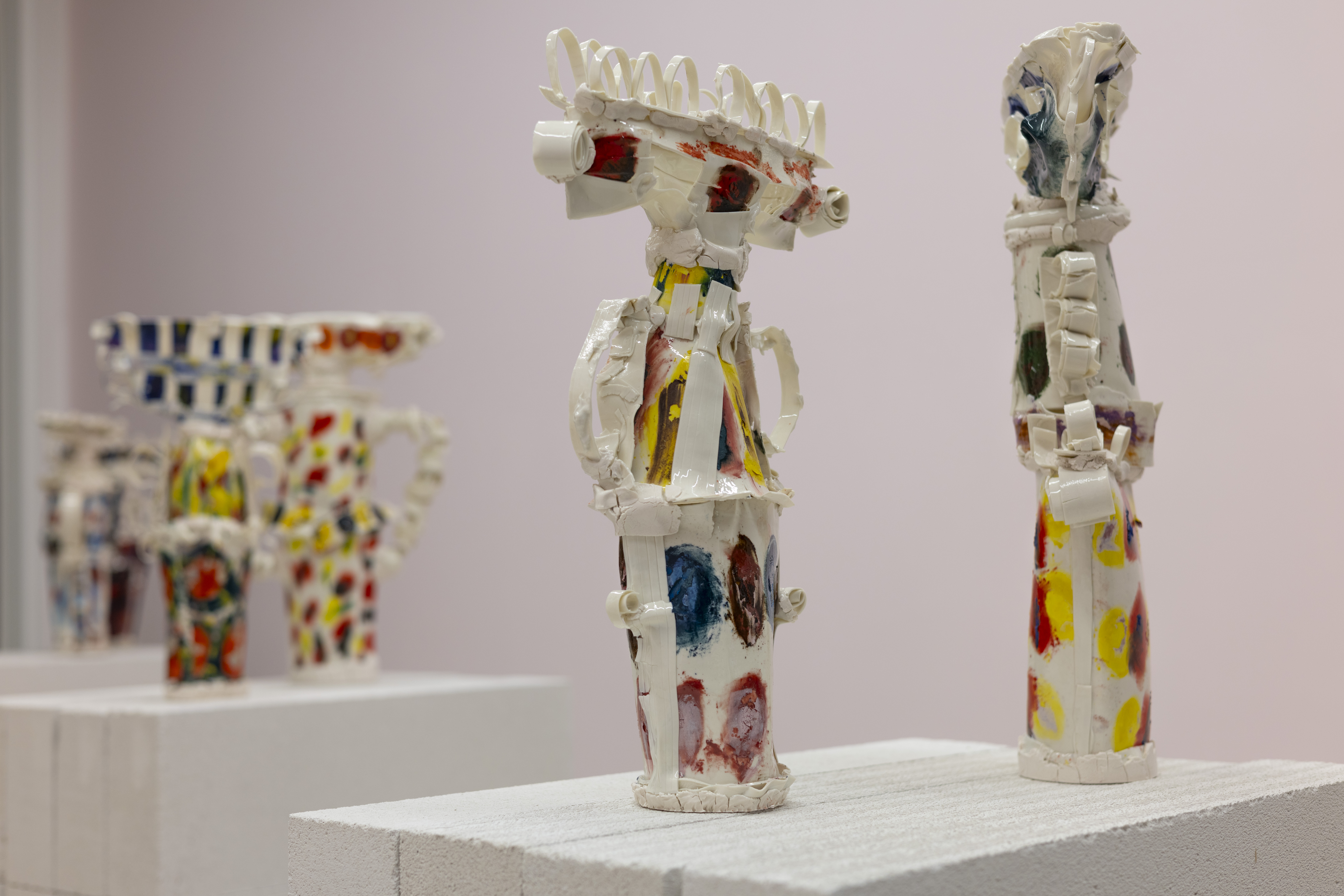
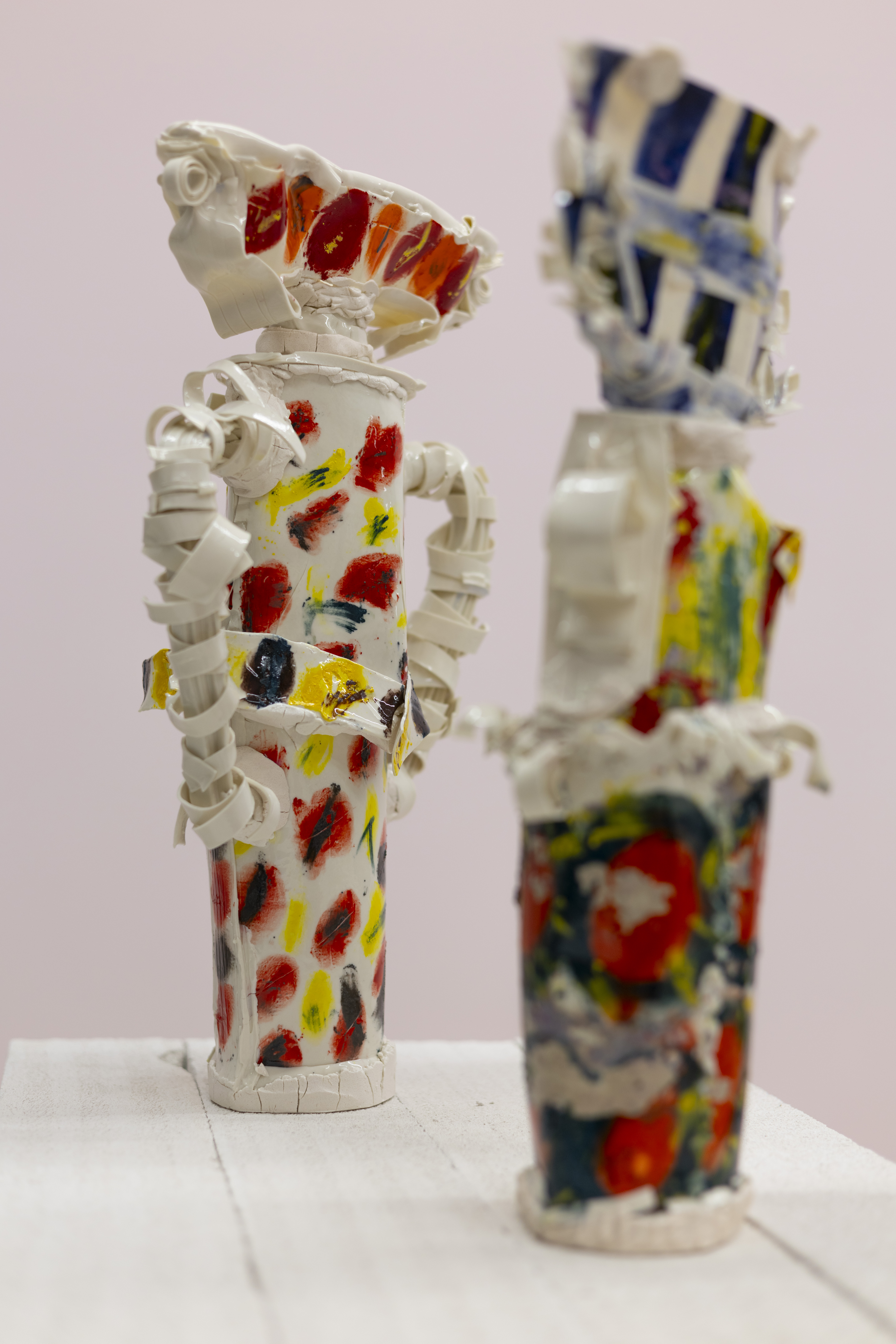
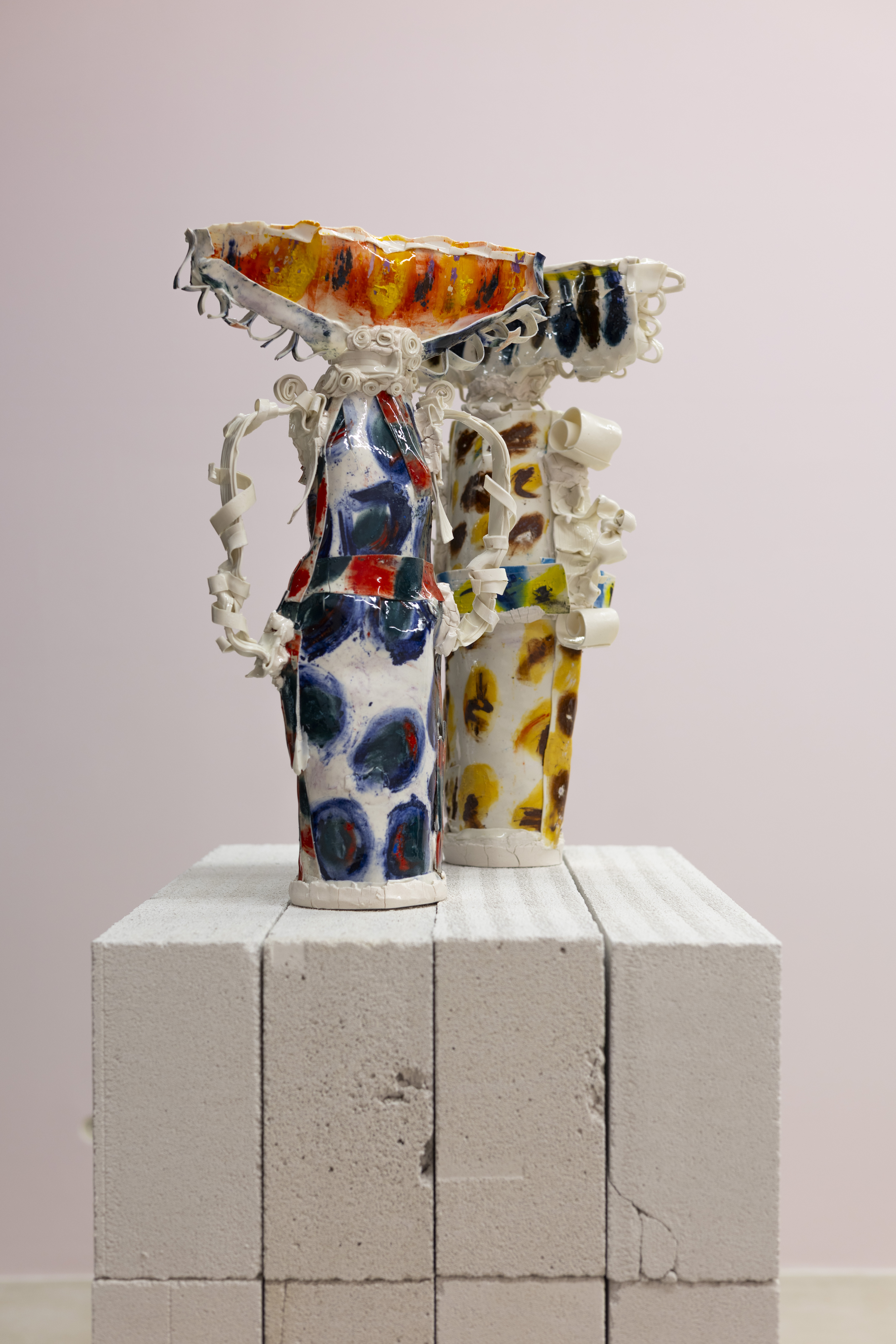
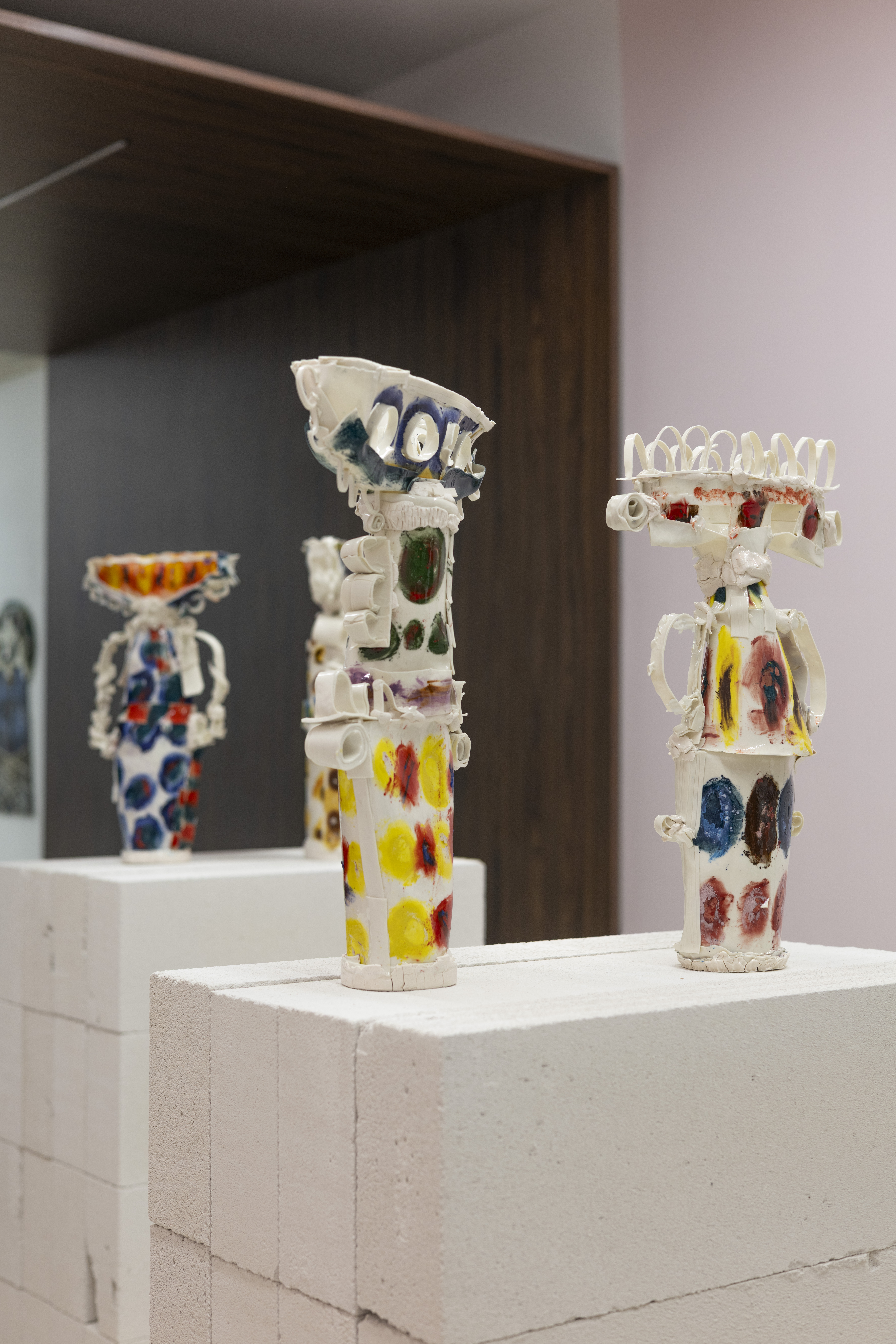
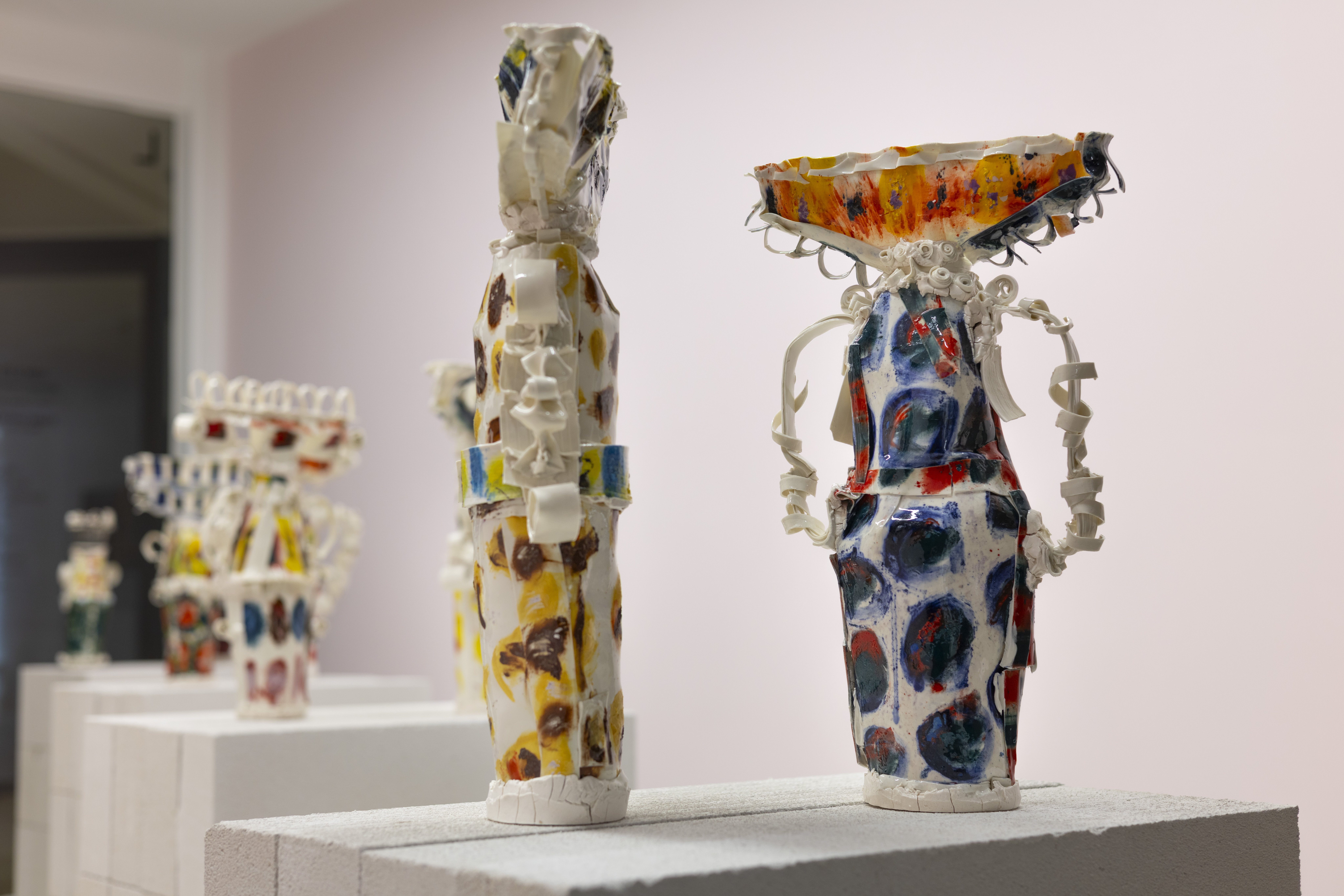
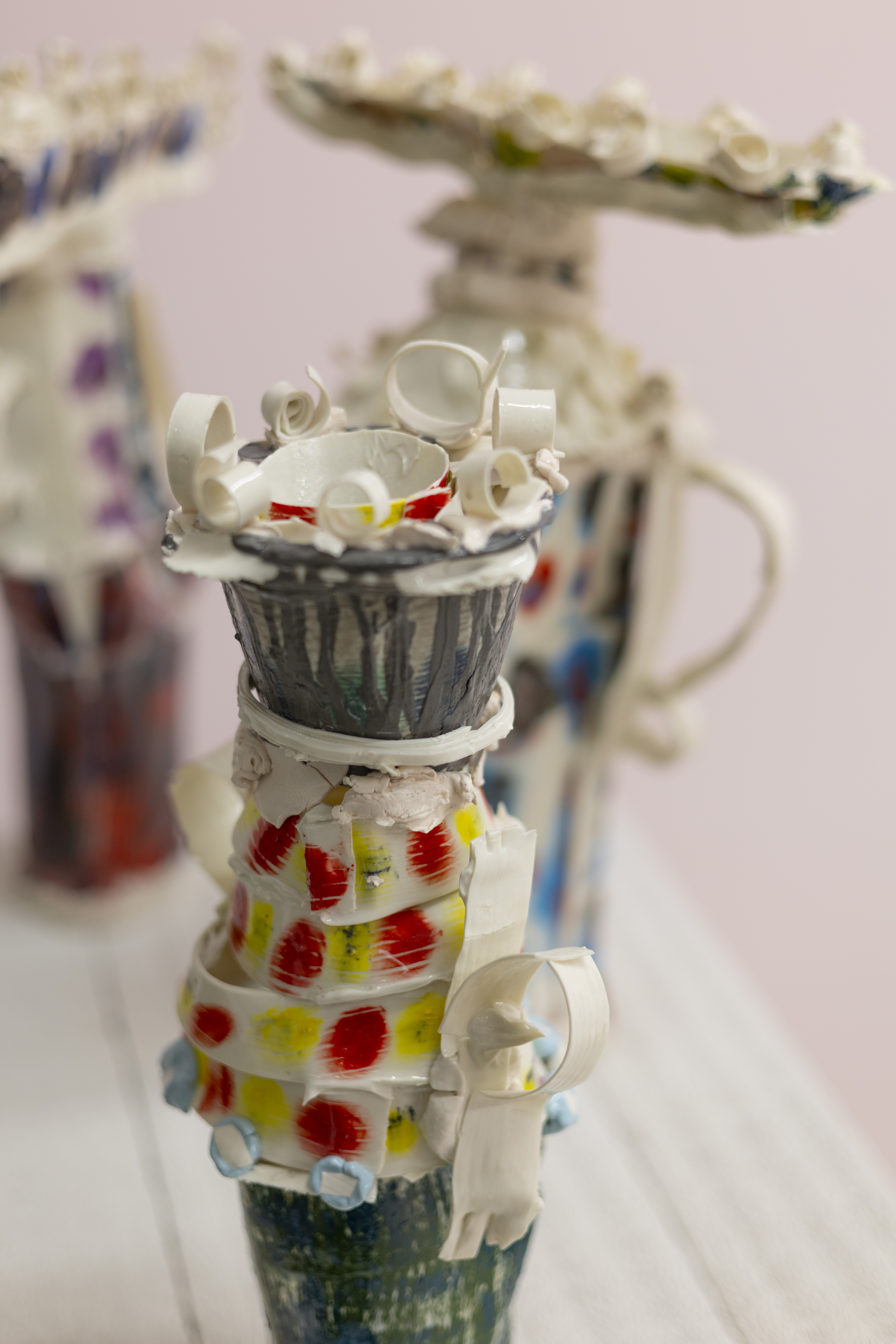
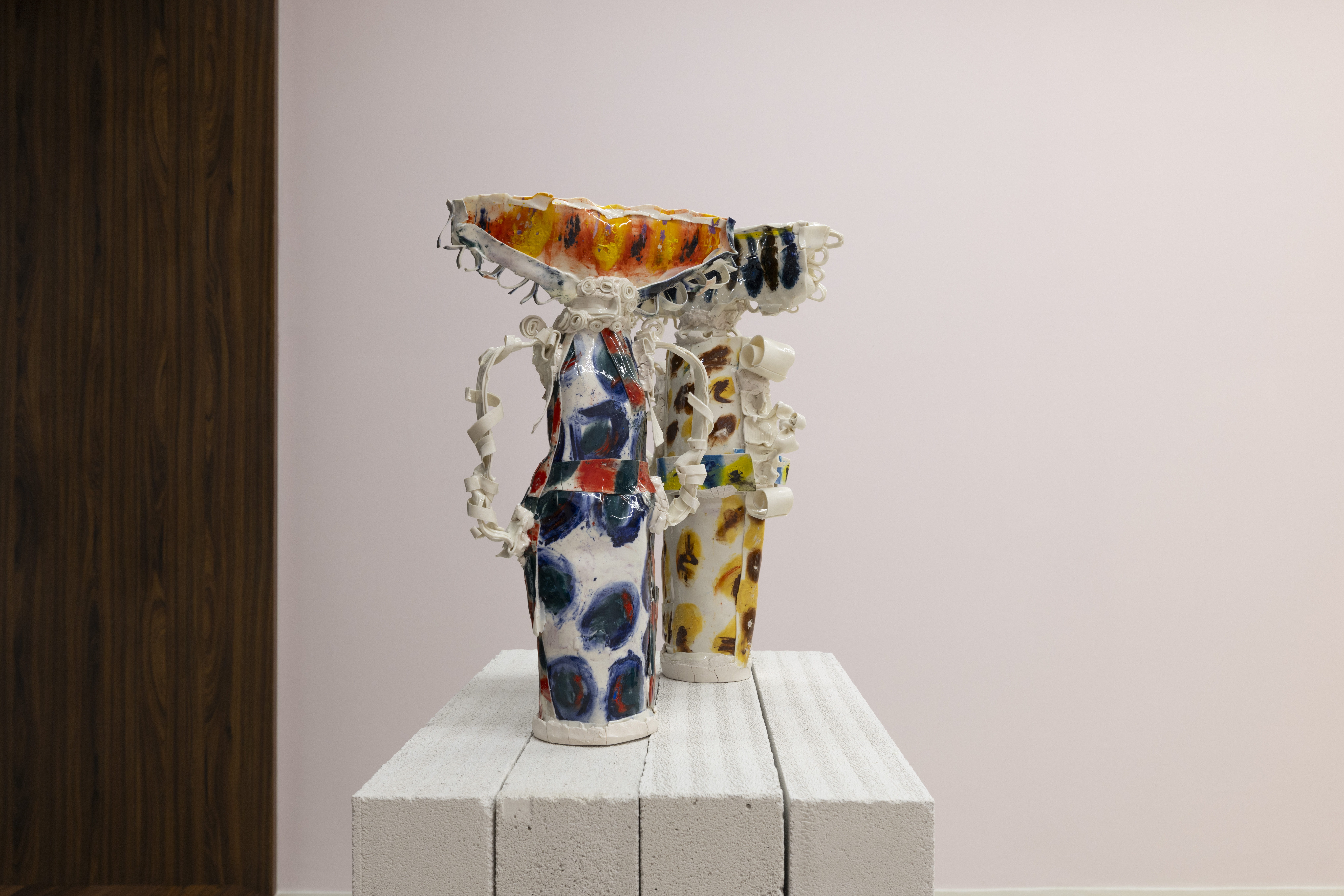
Based in Amsterdam, the Netherlands, Danny Cremers treats porcelain as a site of negotiation, approaching form as an ongoing process rather than a fixed destination. His practice unfolds through touch, interruption, and reassembly. Trained in fashion design at Central Saint Martins, Cremers brings an acute sensitivity to structure, proportion, and deviation in his ceramics. Rather than abandoning classical forms, he revisits vessel typologies with an instinct for disruption: symmetry loosens, volumes shift, and surfaces retain the evidence of their making, irregularities that keep form open and responsive.
Working with hand-built porcelain, Cremers engages with making as a form of three-dimensional sketching. His process privileges immediacy and revision over pre-determined outcomes. Elements are built, stacked, cut, and reassembled, with each decision guided as much by material resistance as by intention. Finality is deliberately postponed: balance emerges gradually. The resulting works hold a quiet tension—a controlled chaos in which intention coexists with chance, made visible in surfaces that catch light unevenly and record the gestures of their making rather than a fixed ideal.
Cremers’ works suggest meaning rather than asserting it. Their generosity lies in this openness, accommodating hesitation and digression. Subtle humor and play in his studio work allow seriousness and lightness to coexist. His stacked forms remain deliberately unsettled, inviting viewers to see form not as perfected, but continually becoming—shaped by attention, intuition, and the productive friction between freedom and control. In doing so, they suggest a liberation from rigid logic and conformity, offering a glimpse of the beauty and subtle chaos of a world never fully conceived in advance.
Threshold
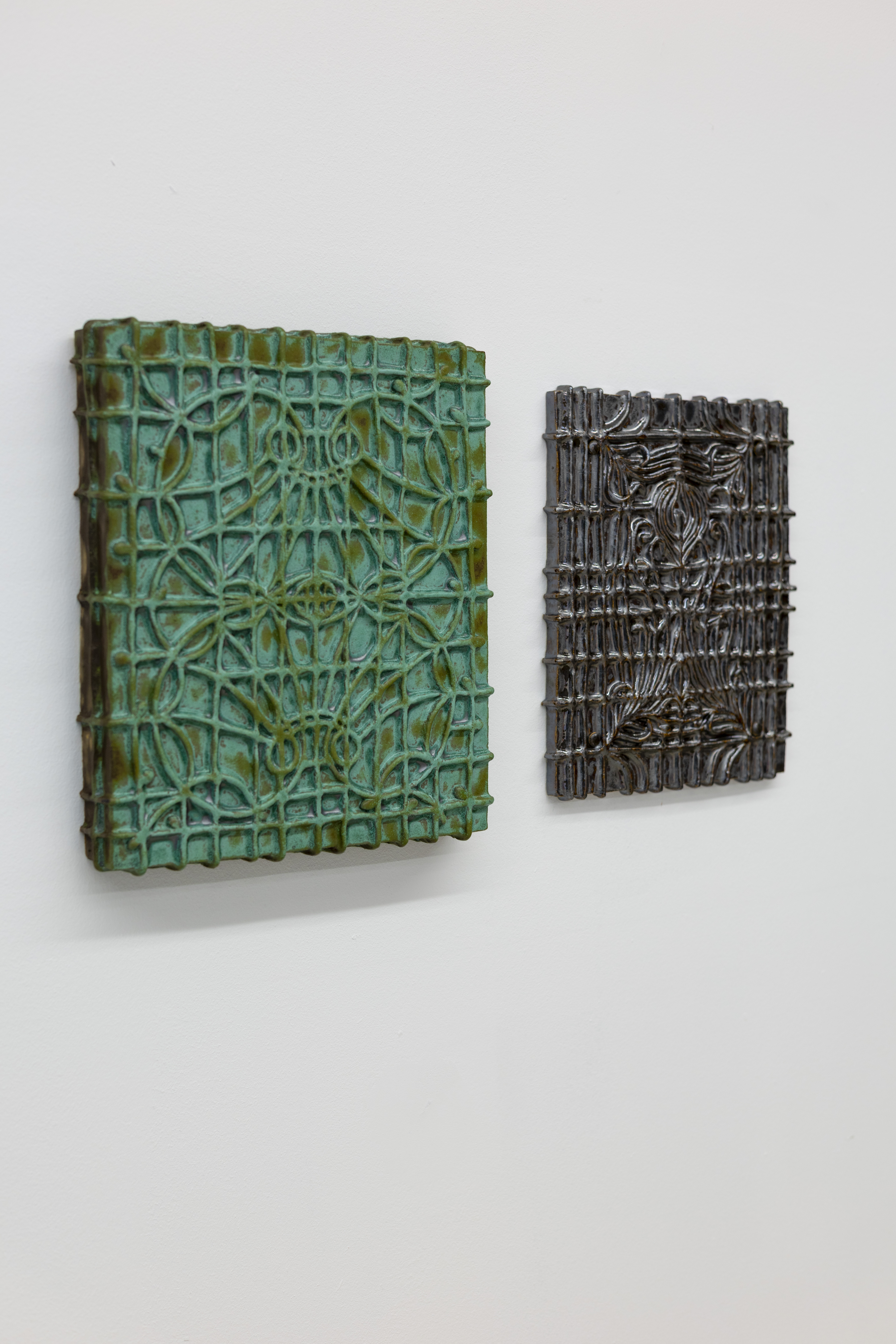
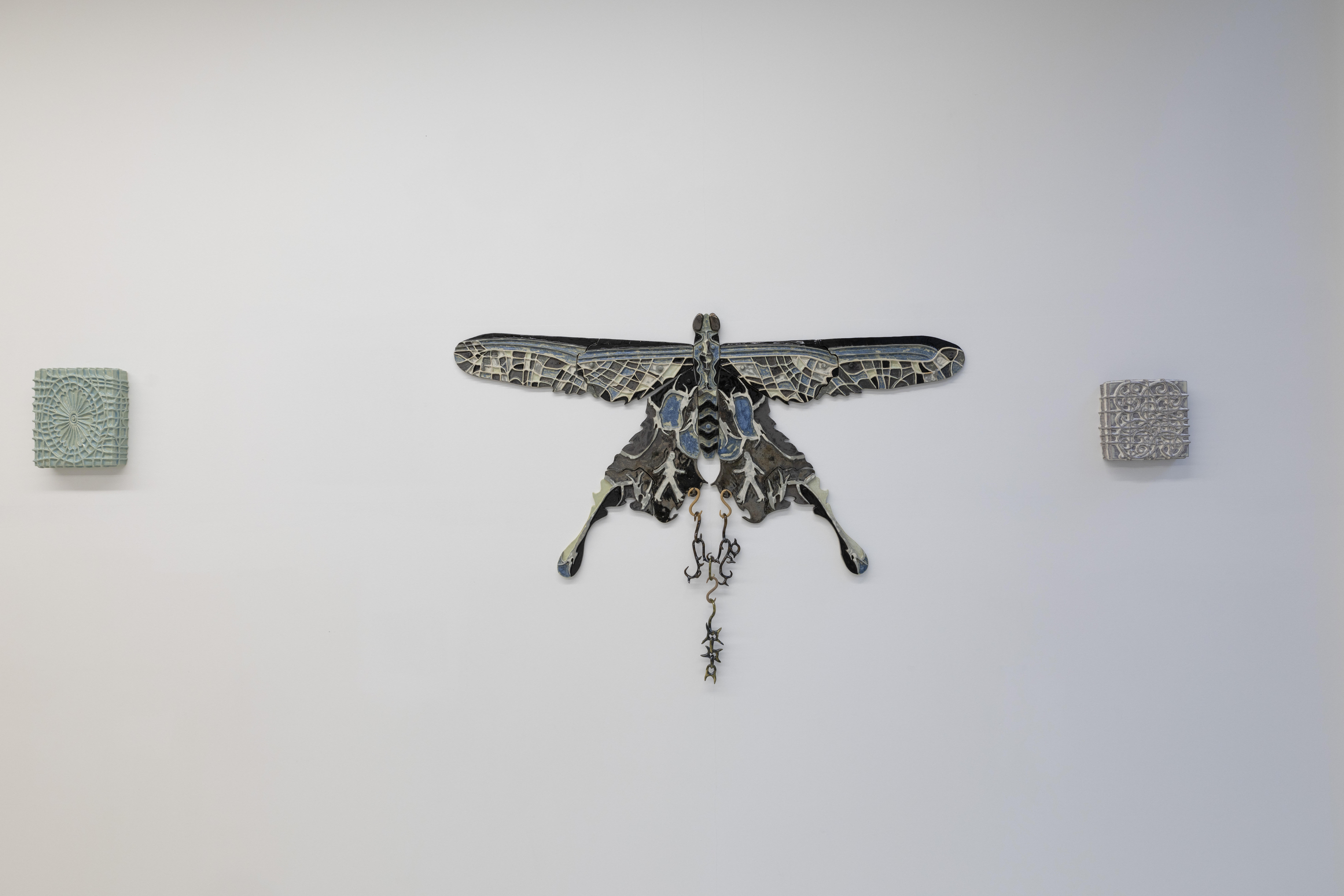
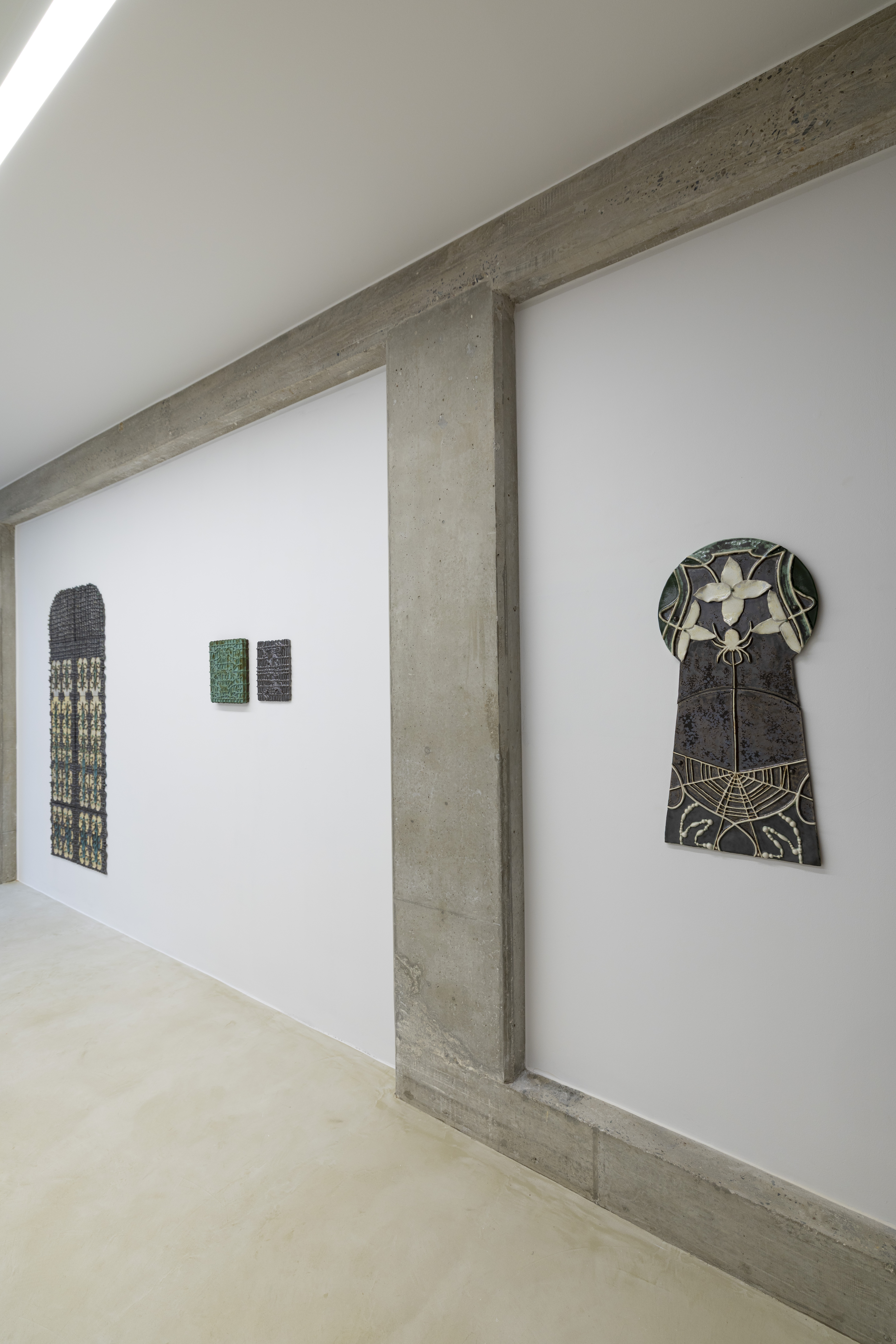
Pic’s sculptures do not occupy space so much as they define moments of transition. Situated between architecture and organic growth, her forms emerge as structures that suggest entry, resistance, or pause—neither fully open nor entirely closed. These works propose thresholds not as physical crossings, but as perceptual conditions: states in which orientation falters and oppositions soften.
The exhibition brings together sculptural elements that evoke containment and ornamentation without resolving into function. Suspended systems of chains, locks, and keys appear less as instruments of control than as fragile constellations, held in provisional balance. Their presence introduces an ambiguity between safeguarding and exposure, hinting at systems designed to protect yet perpetually on the verge of failure.
Materiality plays a central role in this instability. Rendered in glazed ceramics with reflective, mineral-like surfaces, the sculptures oscillate between hardness and delicacy. Their finish recalls both the weight of forged metal and the luminosity of polished stone, producing a surface that resists immediate categorization. Chromatic nuances—subtle, aqueous, and restrained—reinforce a sense of suspension, as though the objects were caught mid-transformation.
Rather than separating interior from exterior, Pic’s work dissolves this binary. The threshold becomes a site of negotiation, where growth encounters structure, and where ornament operates as a mediator rather than a decoration. In this space, architecture behaves like an organism, and organic forms adopt the logic of construction.
Threshold invites viewers to remain within this unstable zone. It offers no clear passage, no resolution, but instead foregrounds the act of standing at the limit—where form, material, and meaning are continuously reconfigured.