Nos Lianes Infinies
(Our infinite creepers)
Past
16 March – 26 April
Artist
About the exhibition
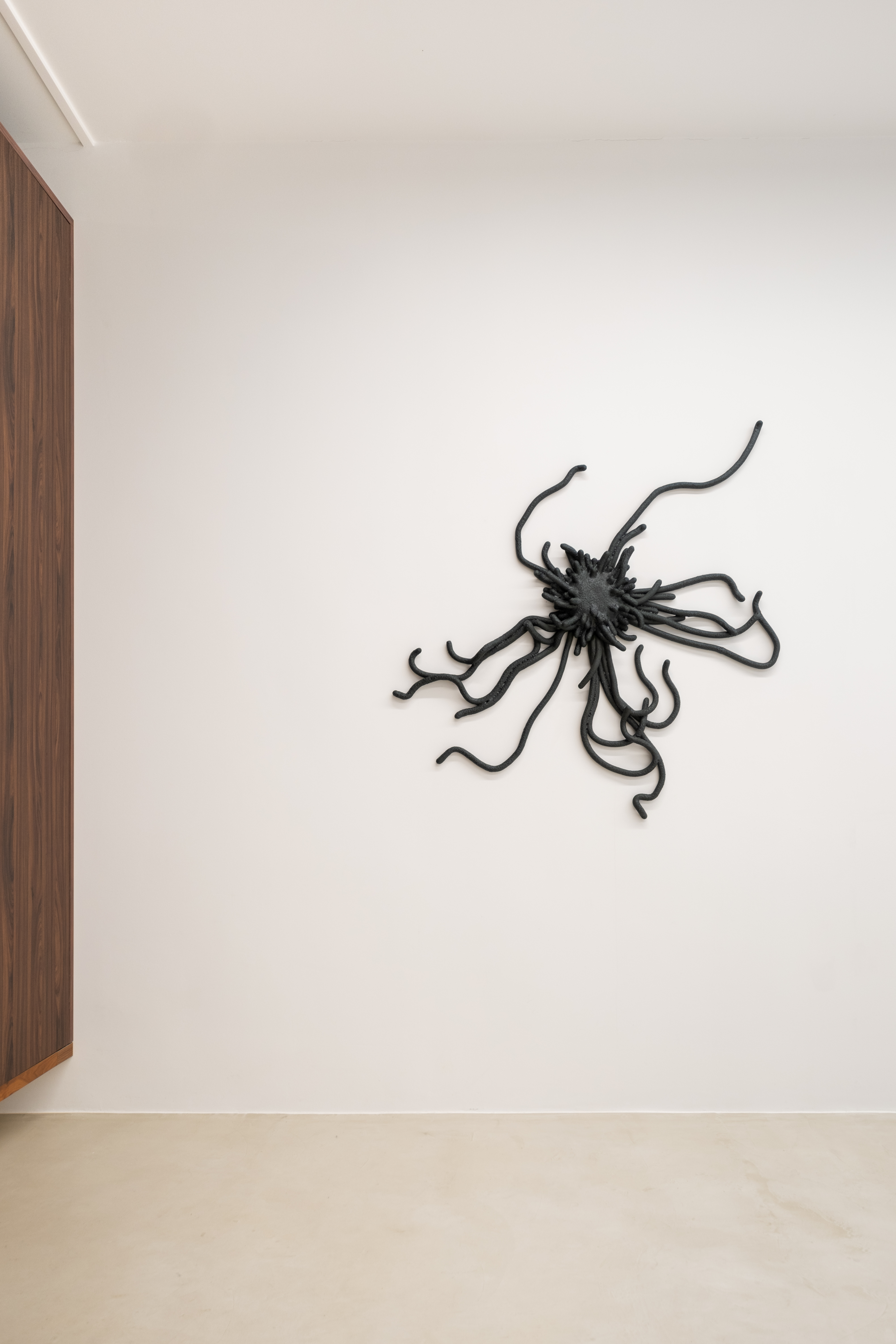
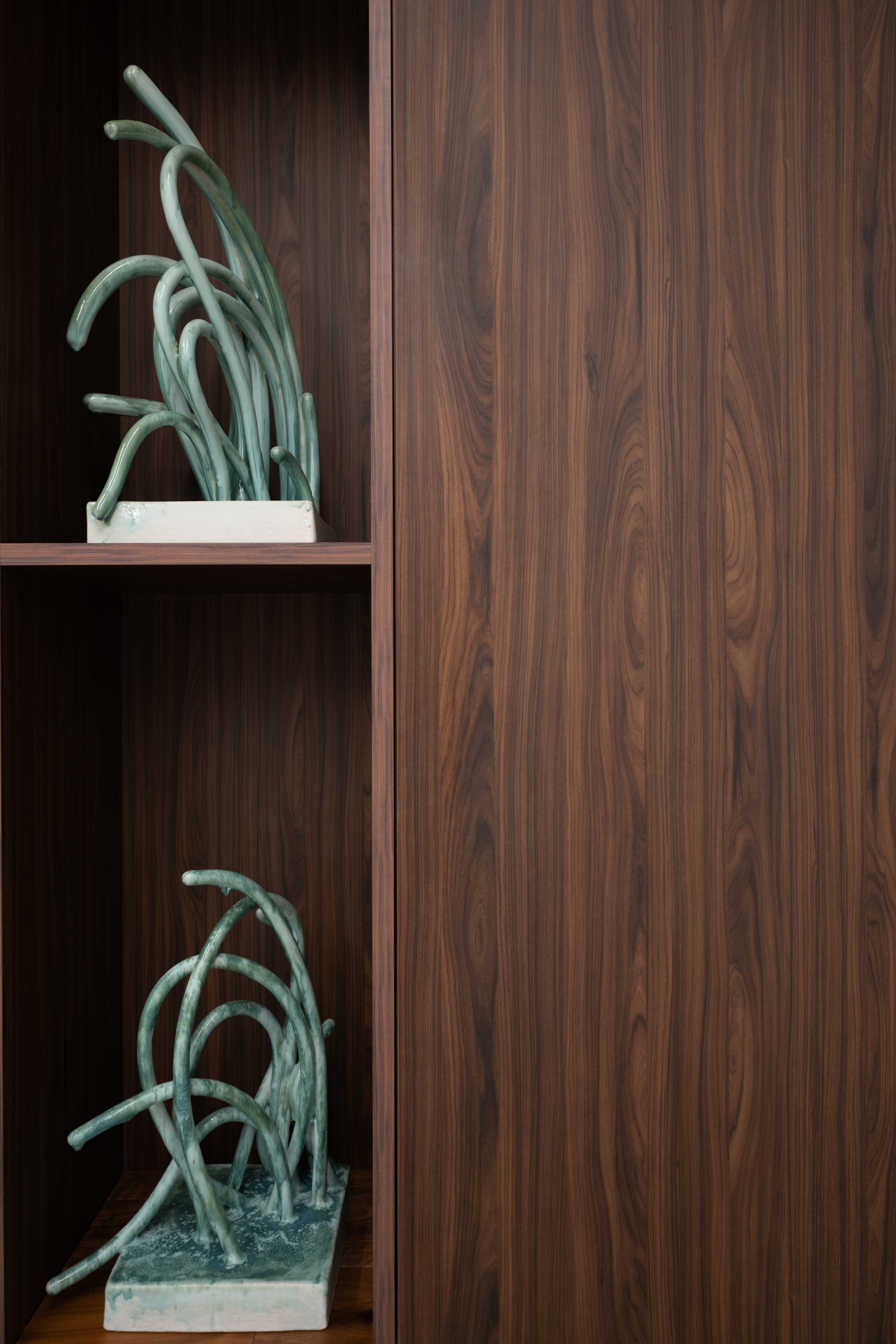
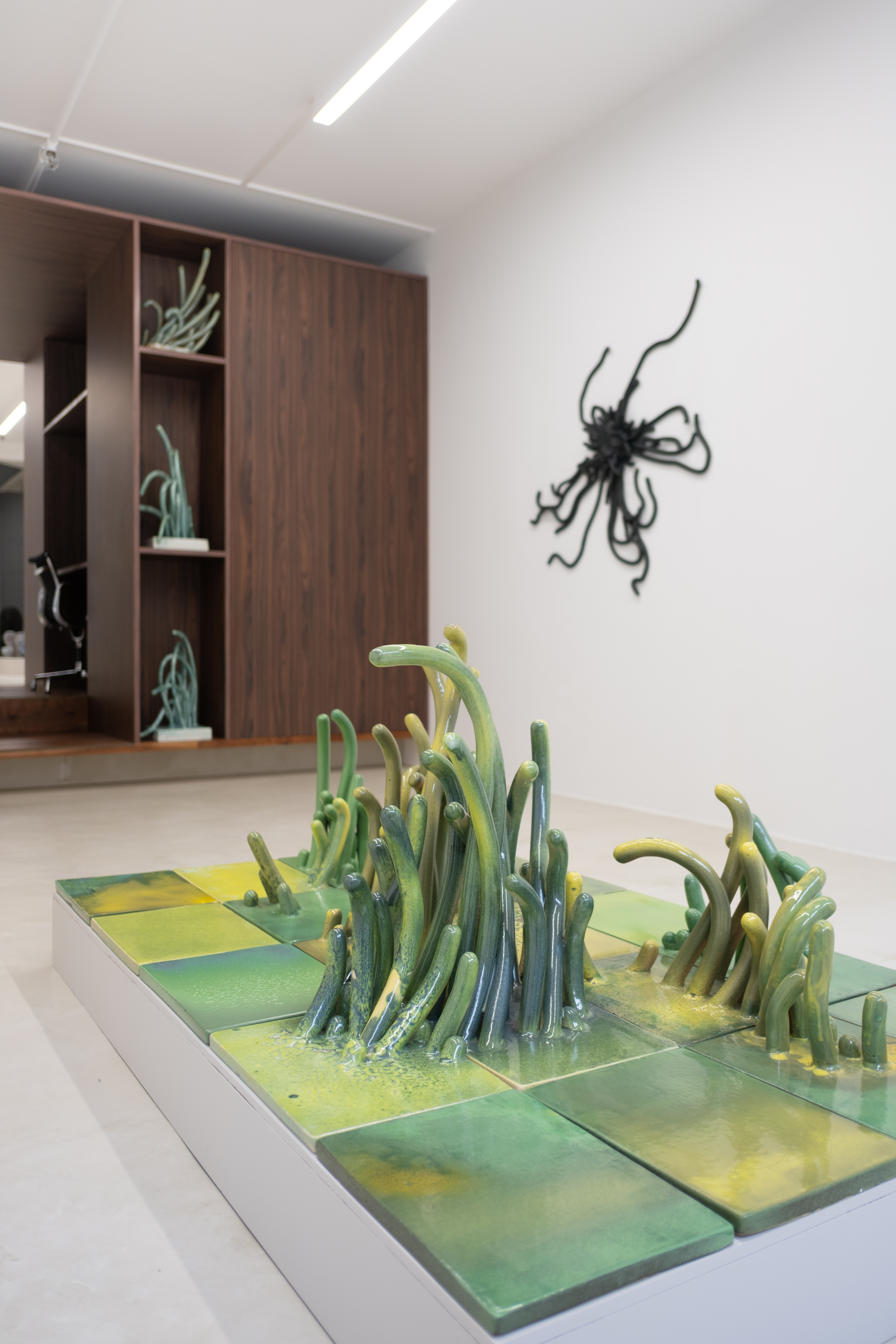
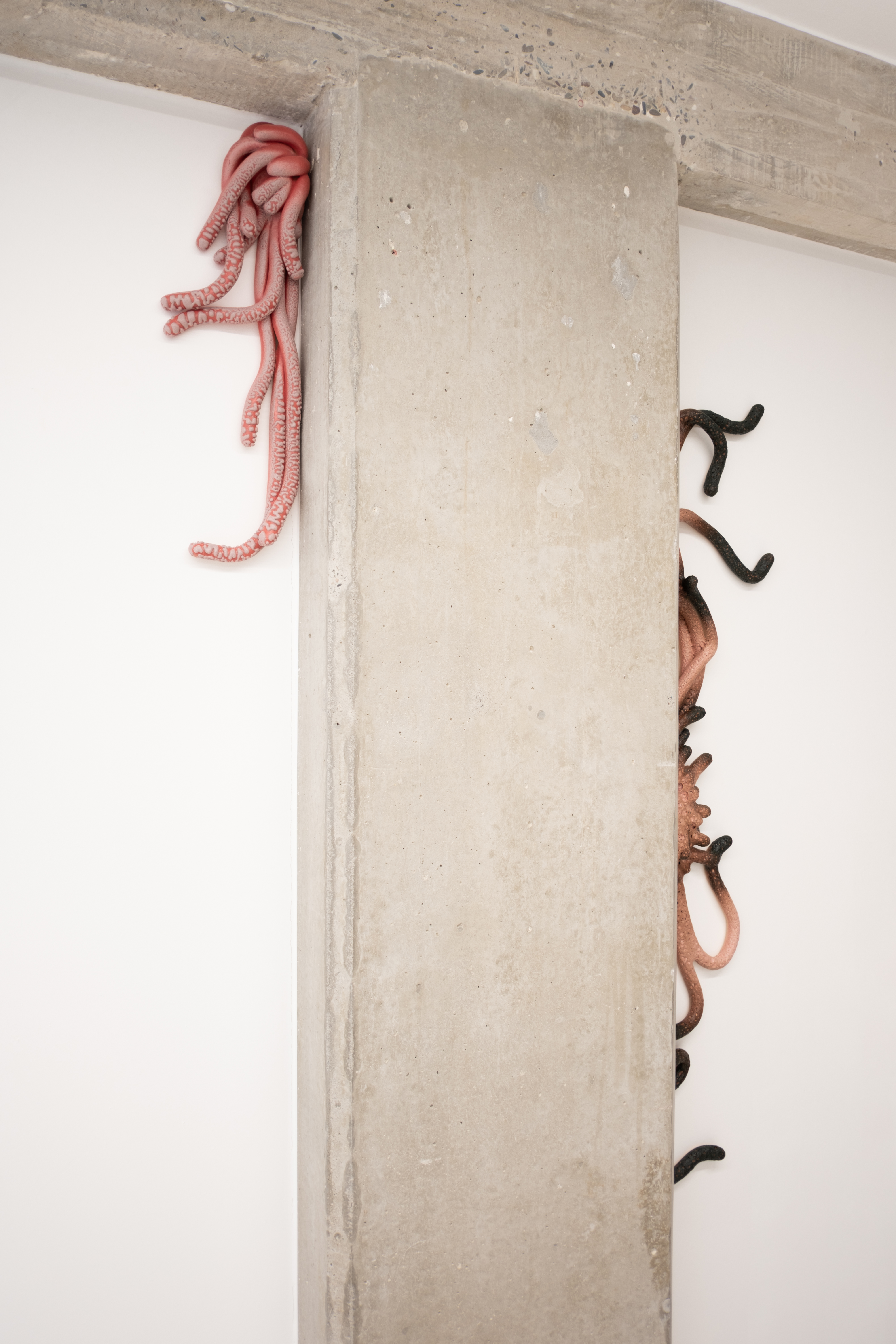
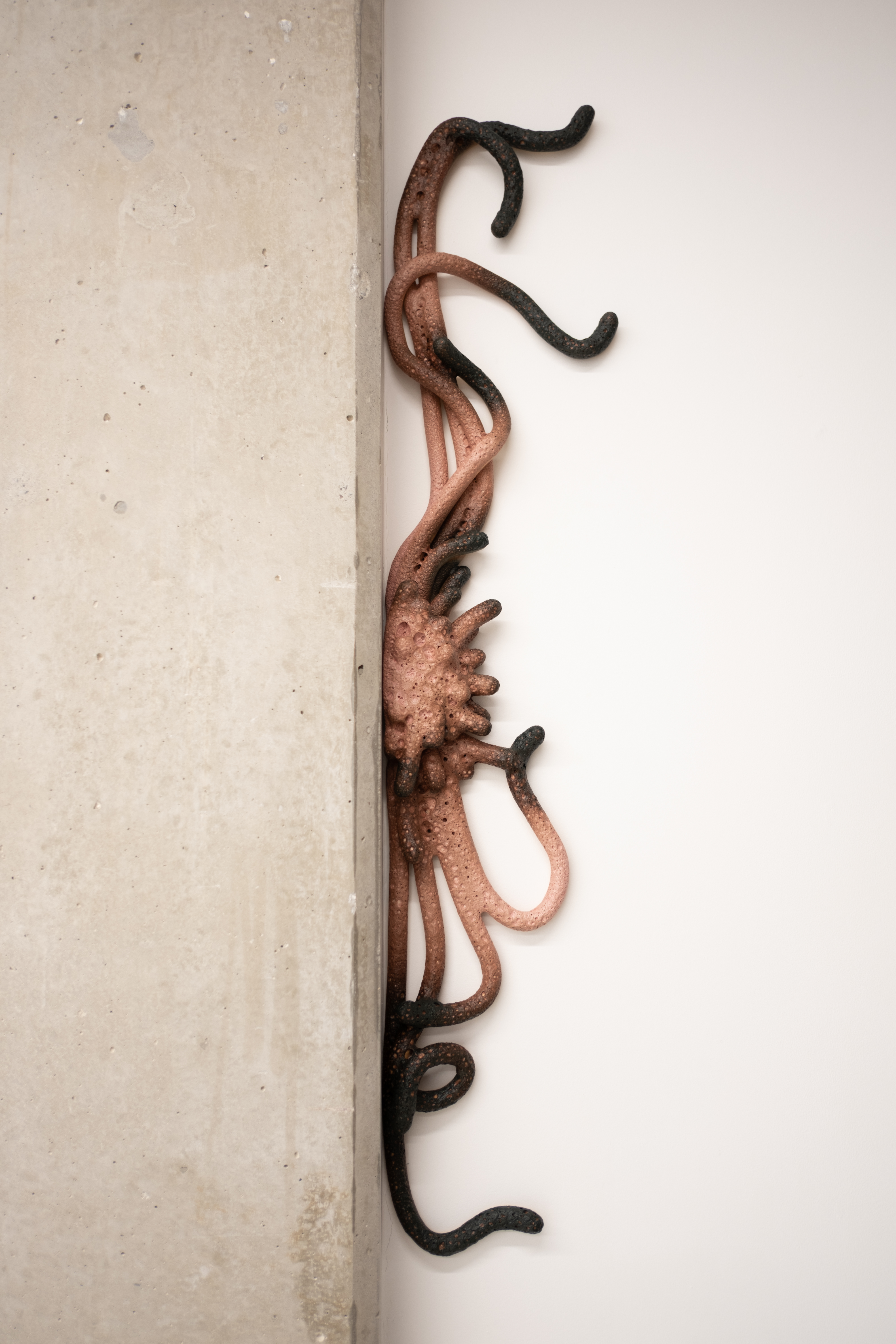
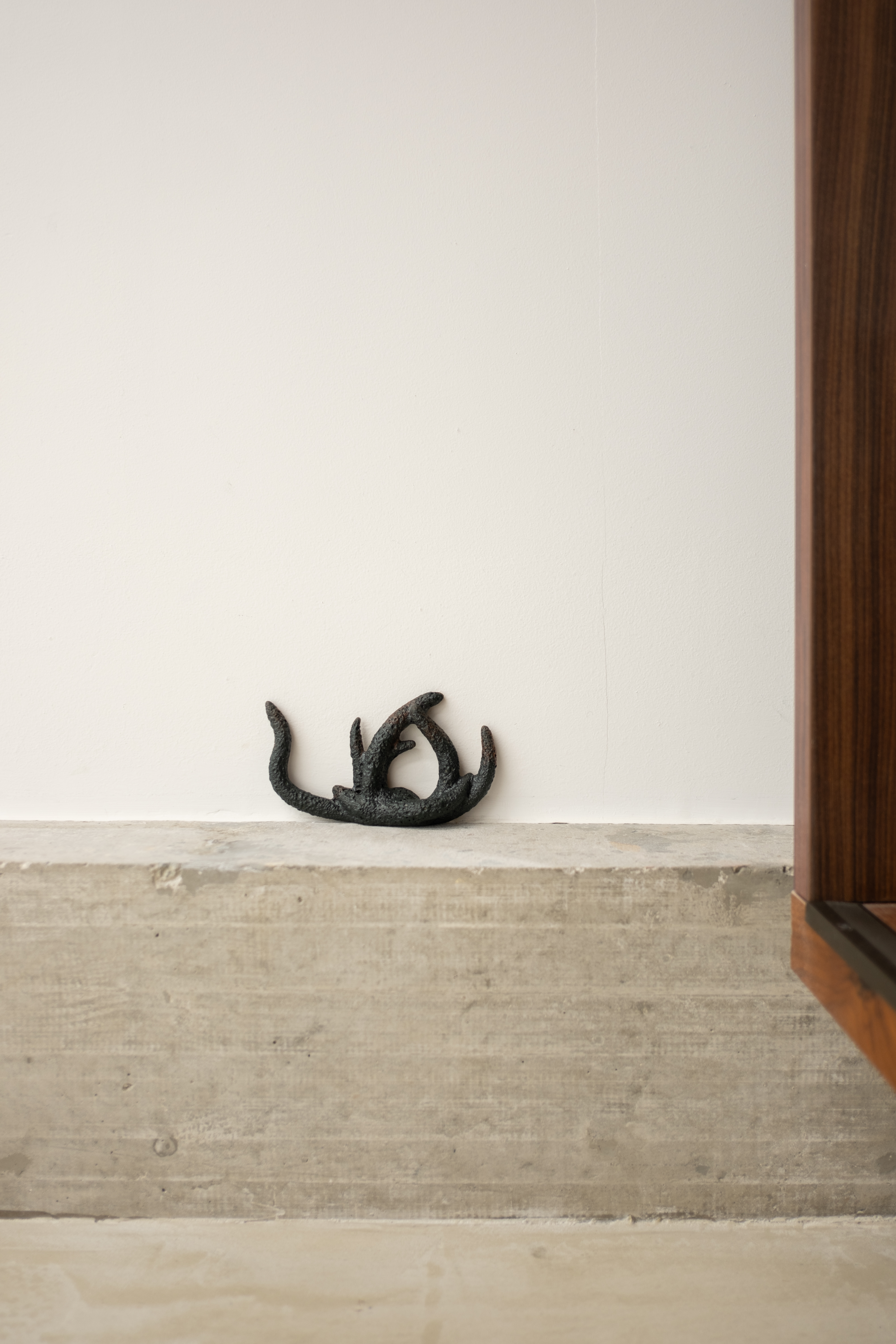
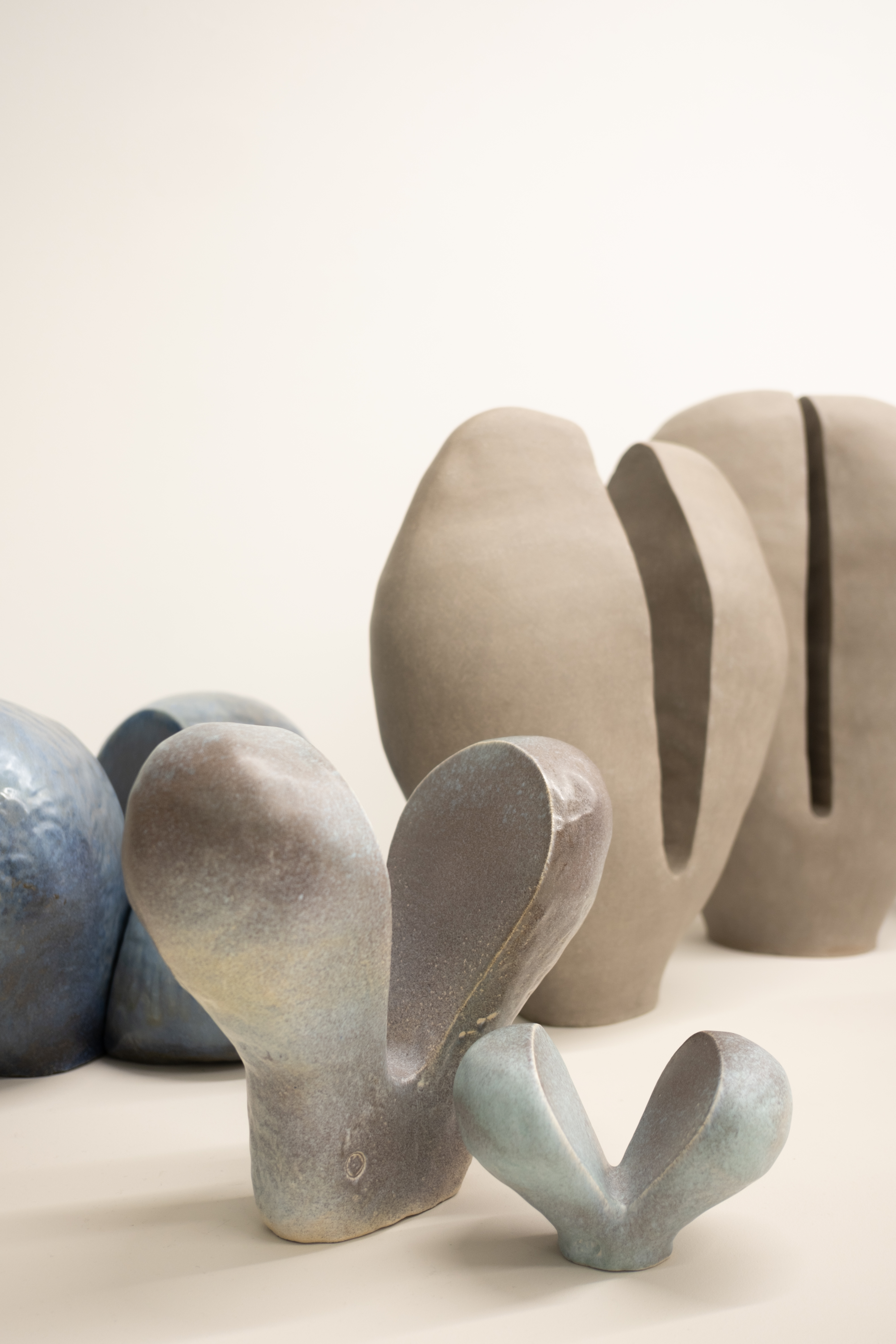
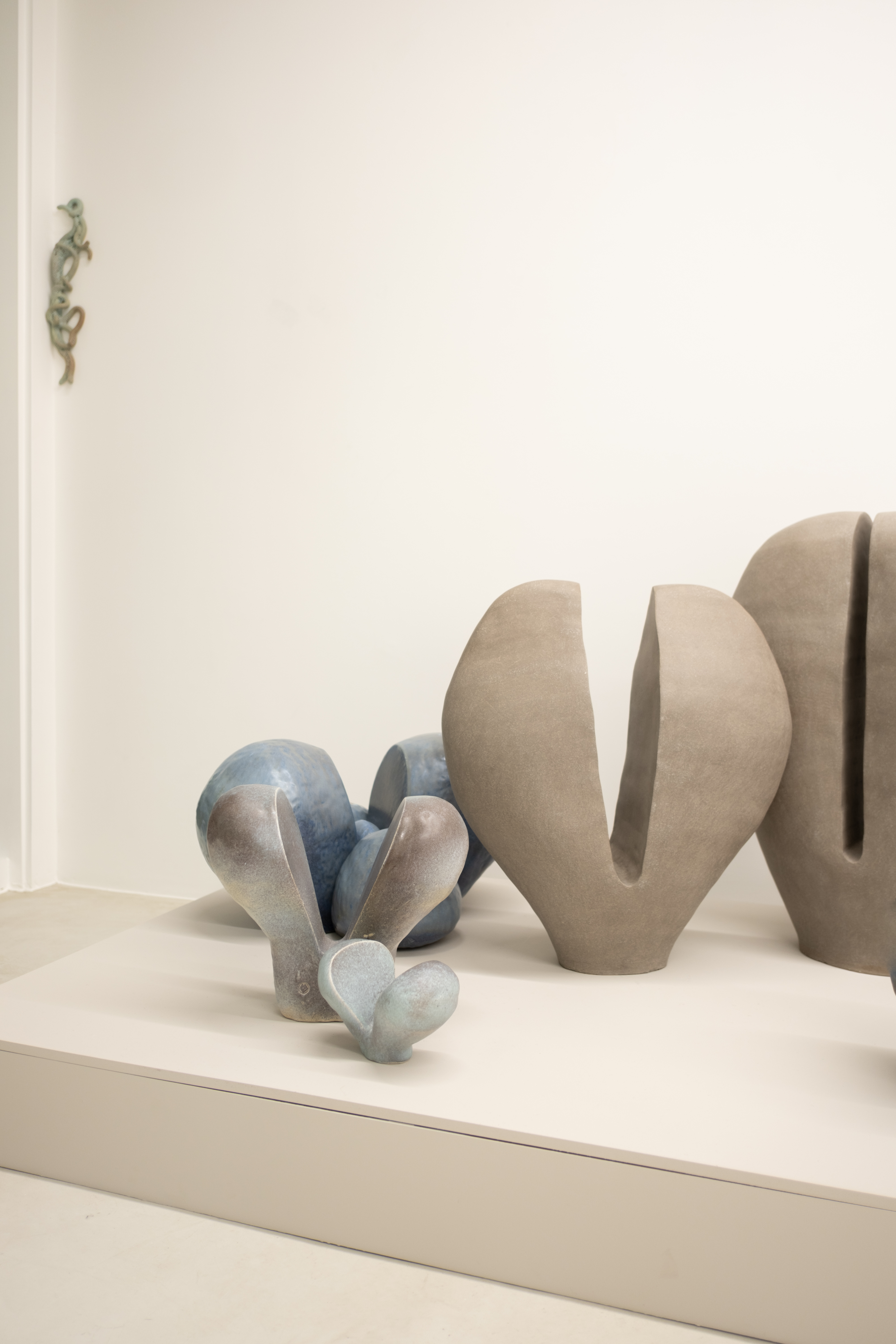
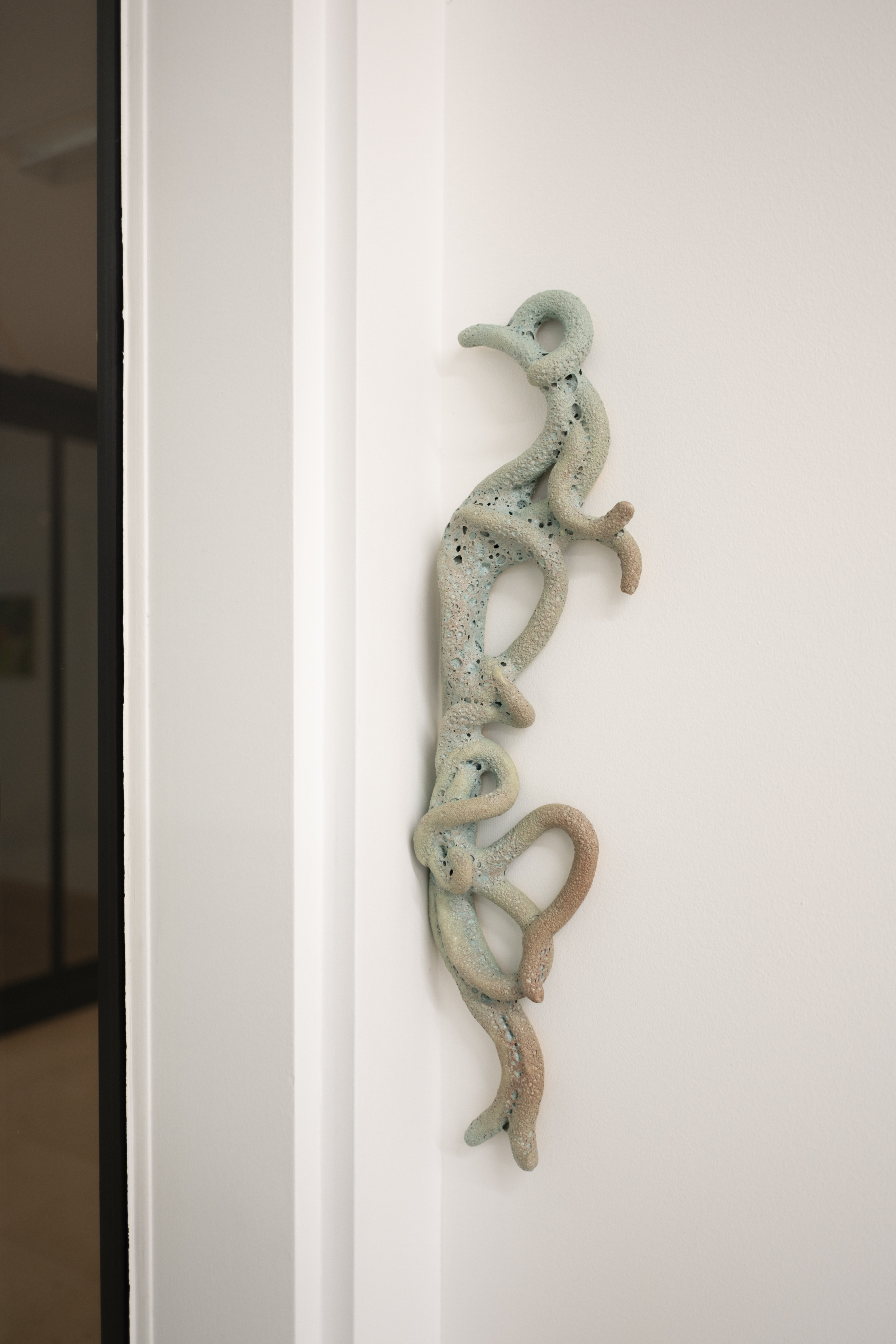
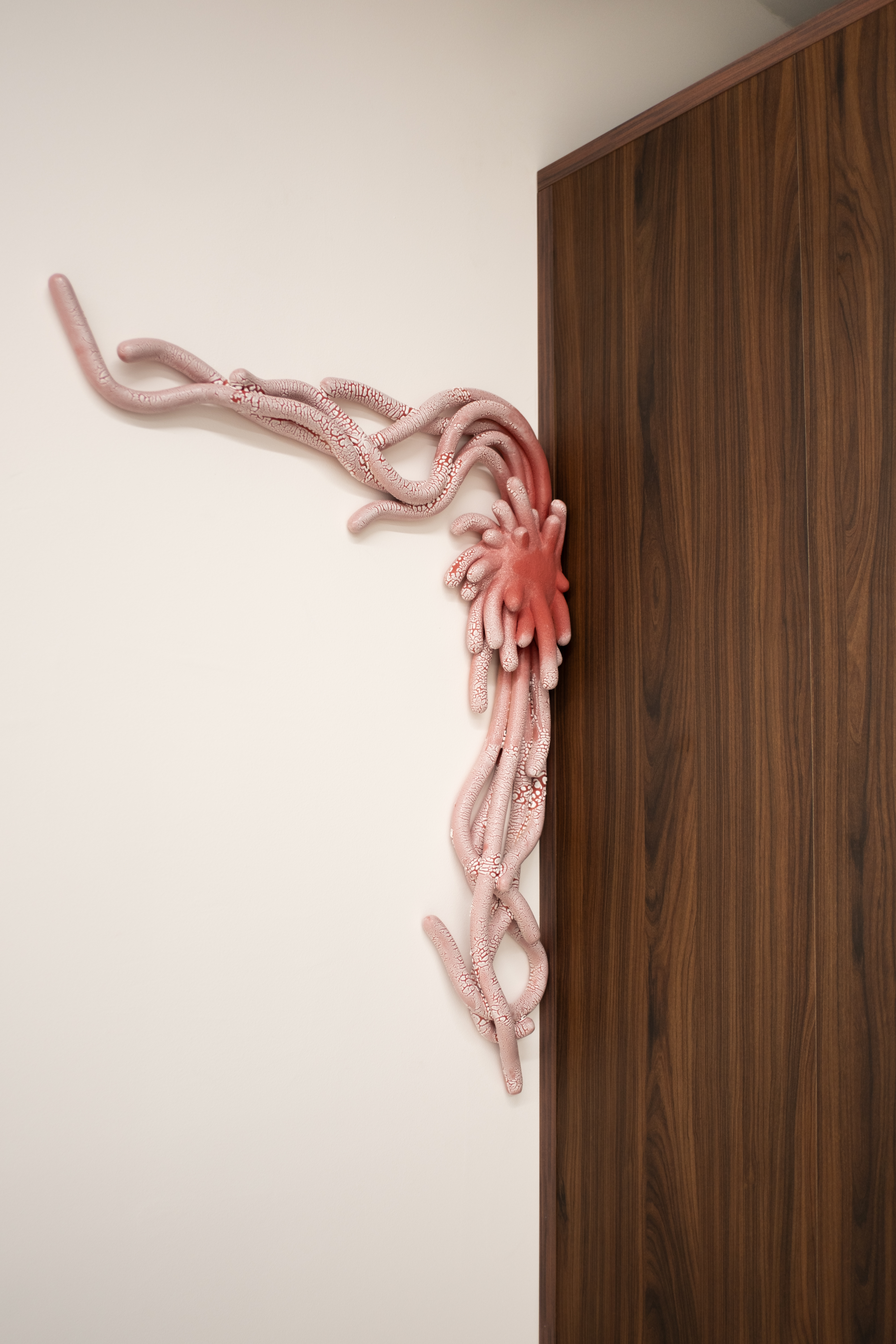
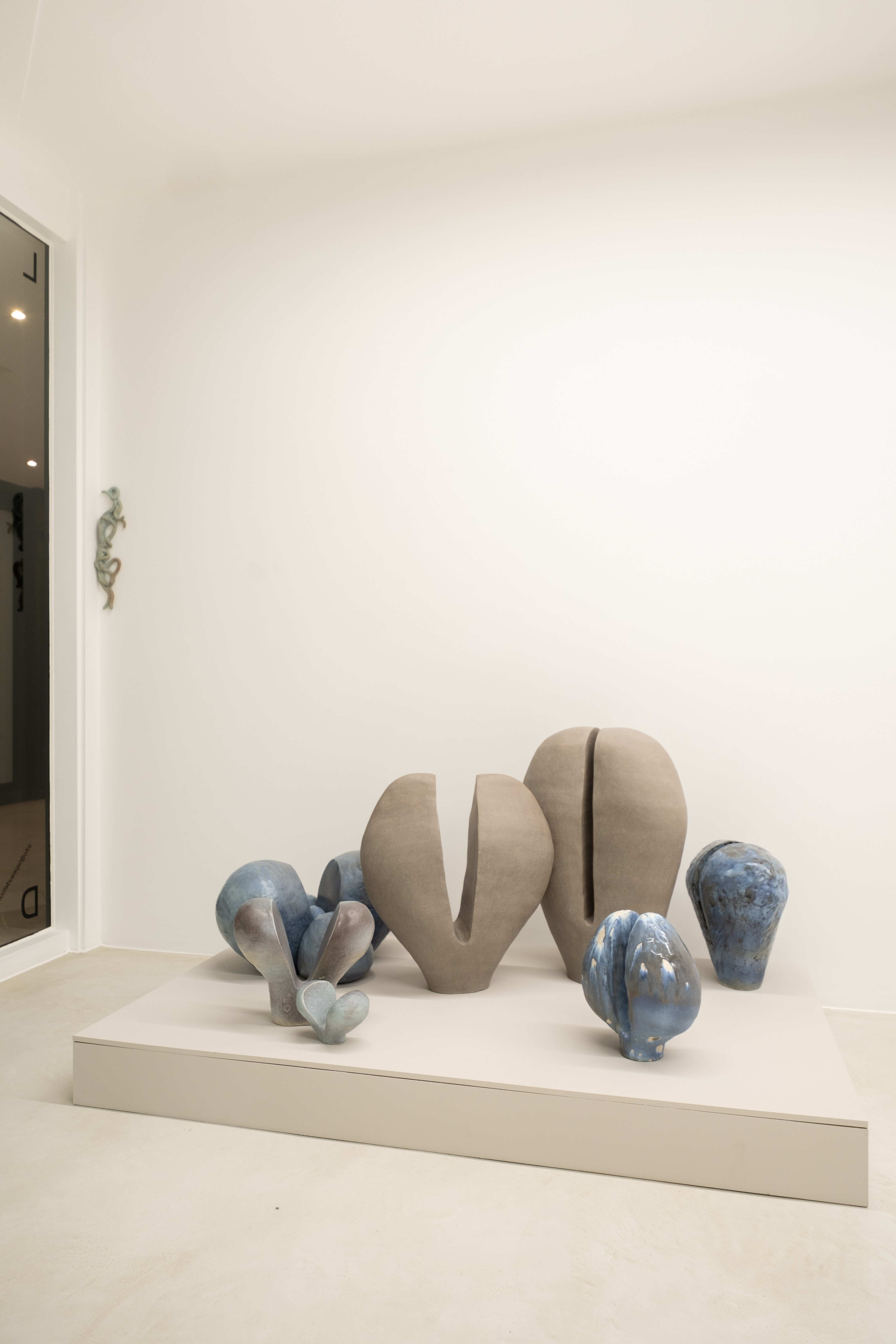
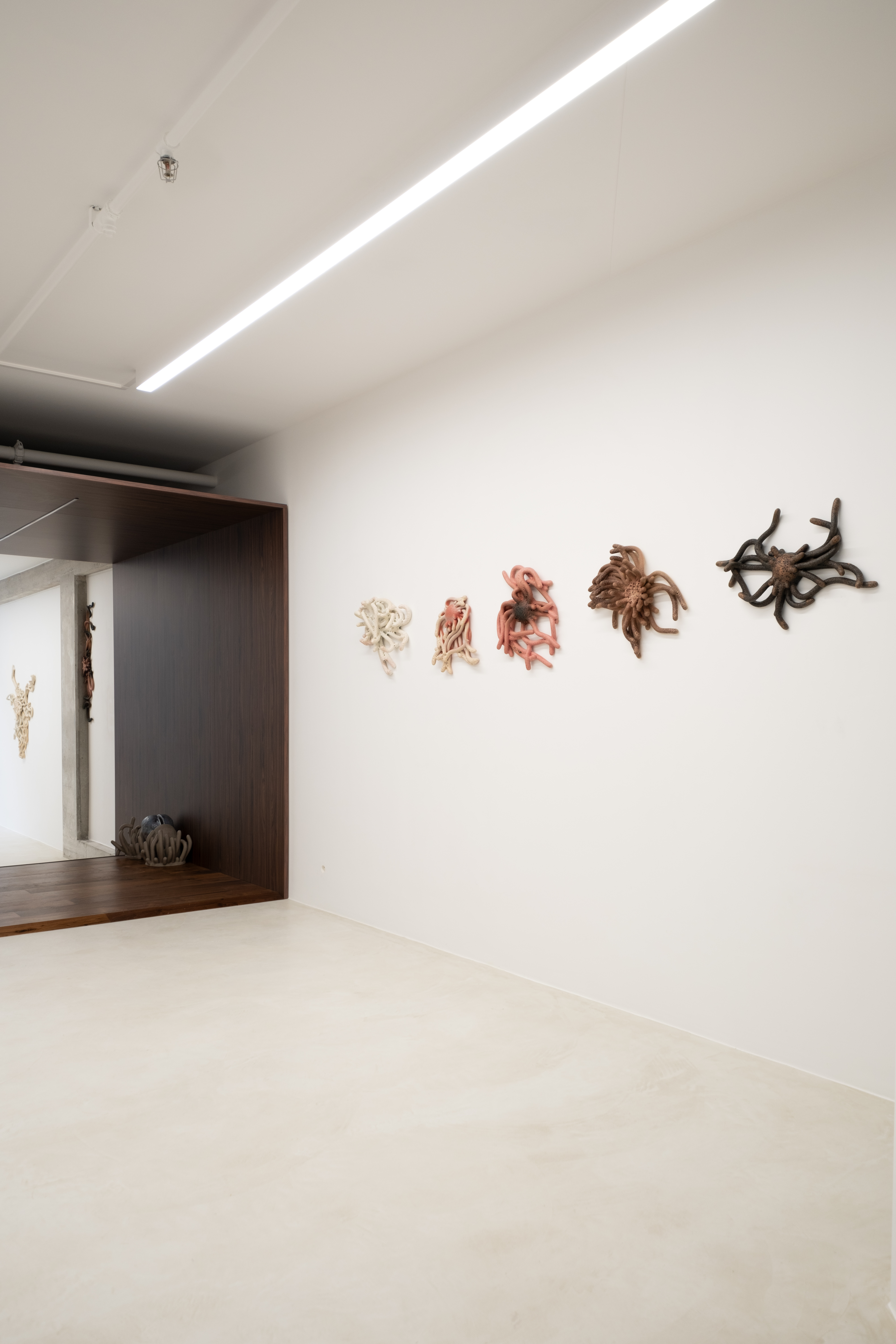
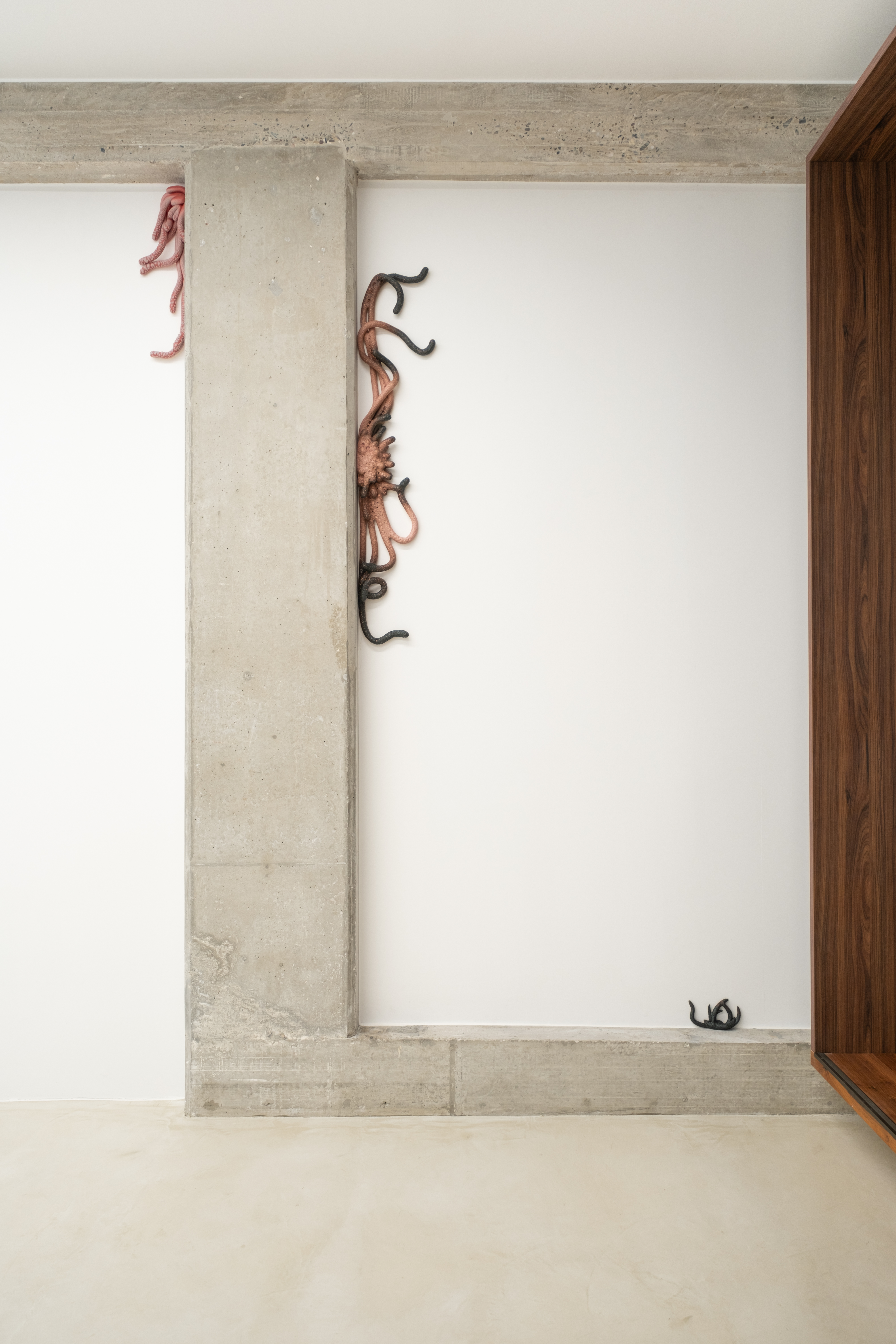
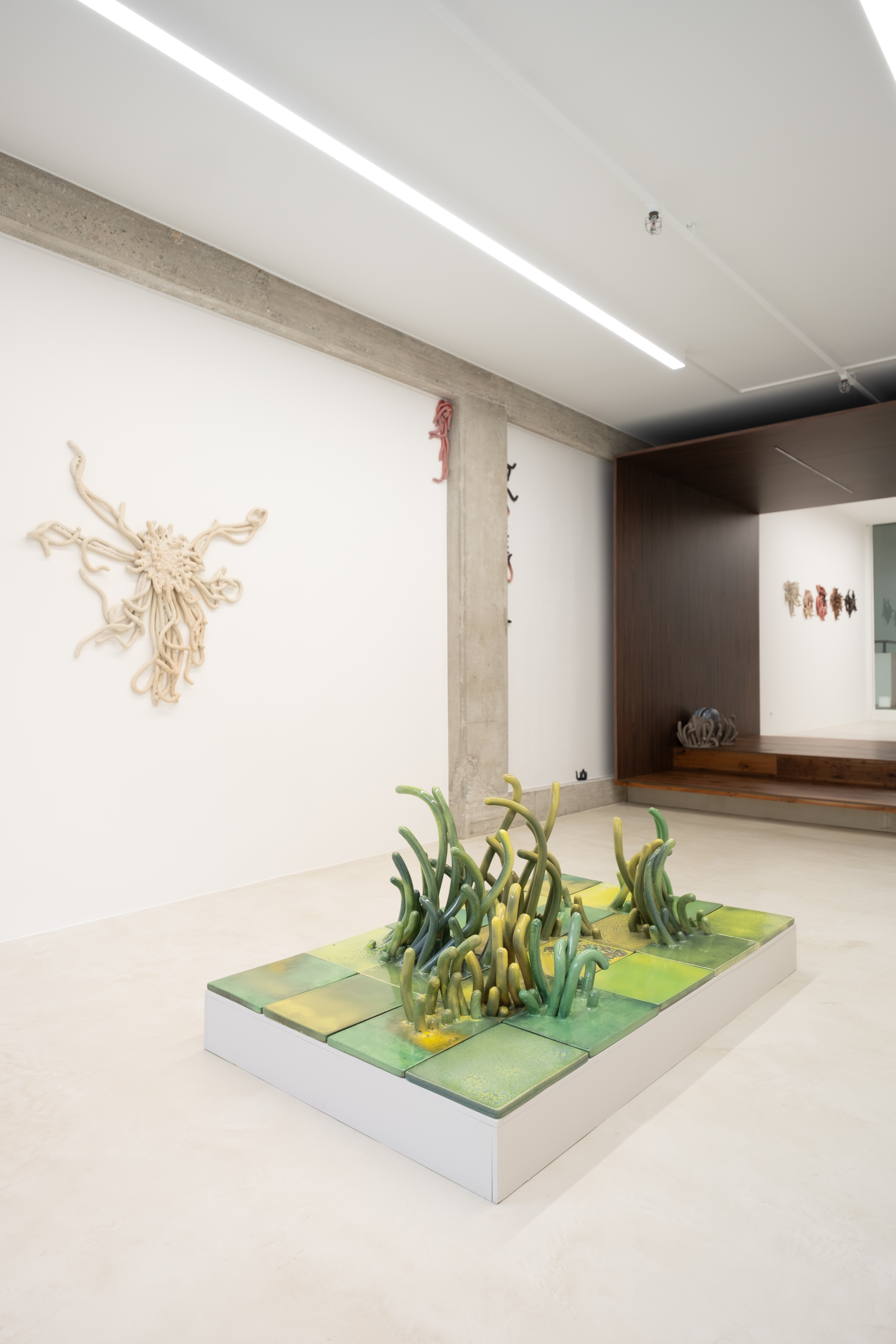
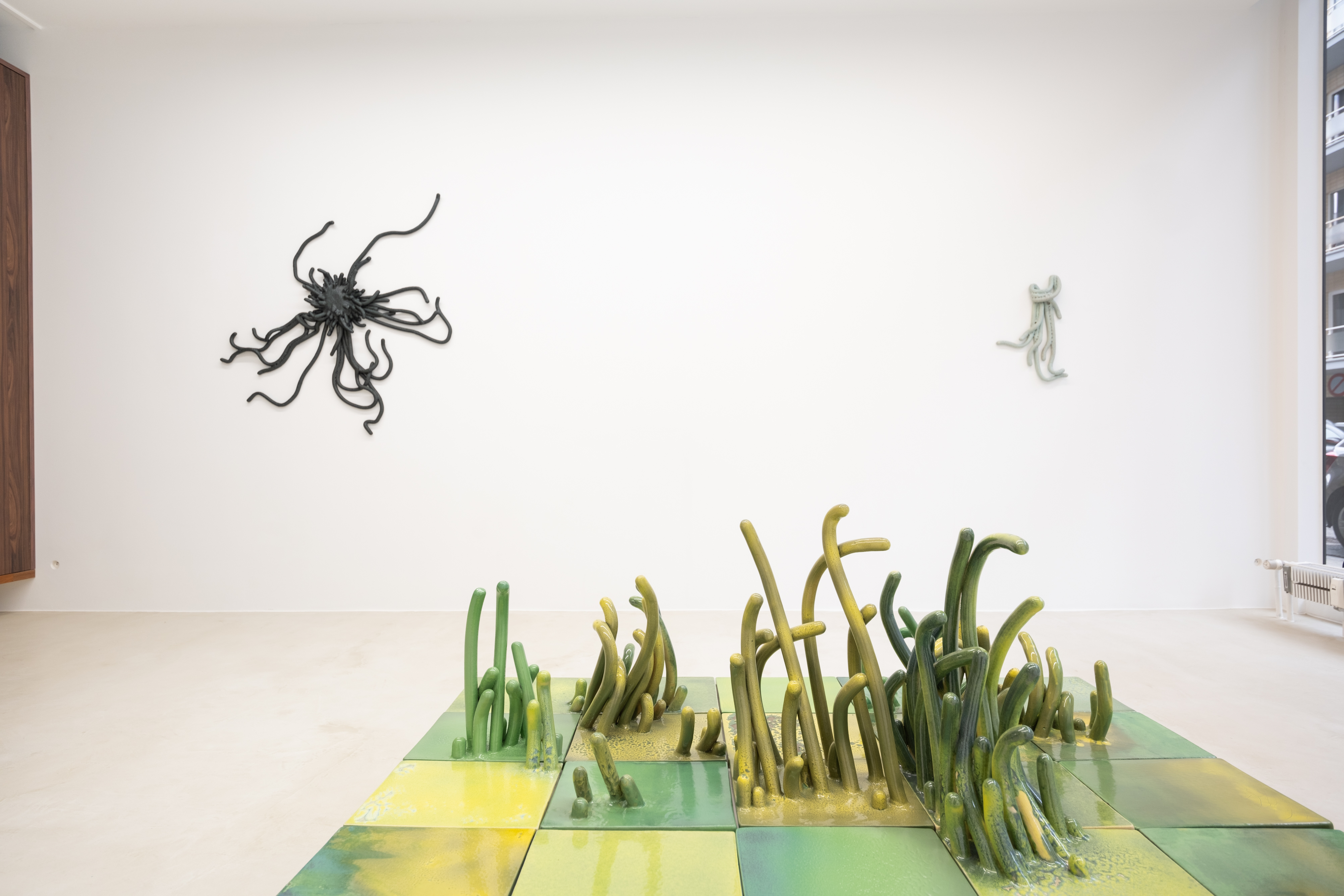
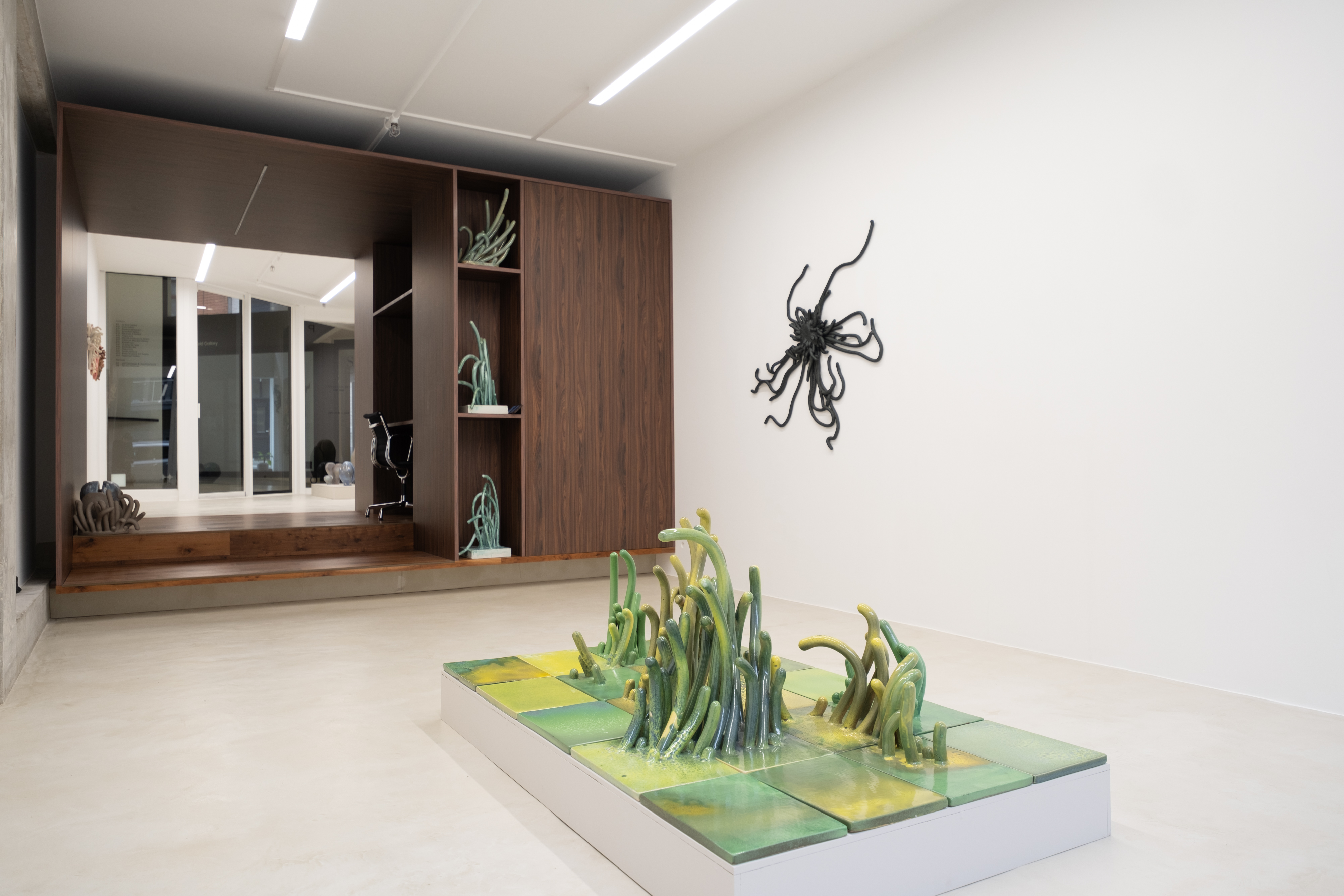
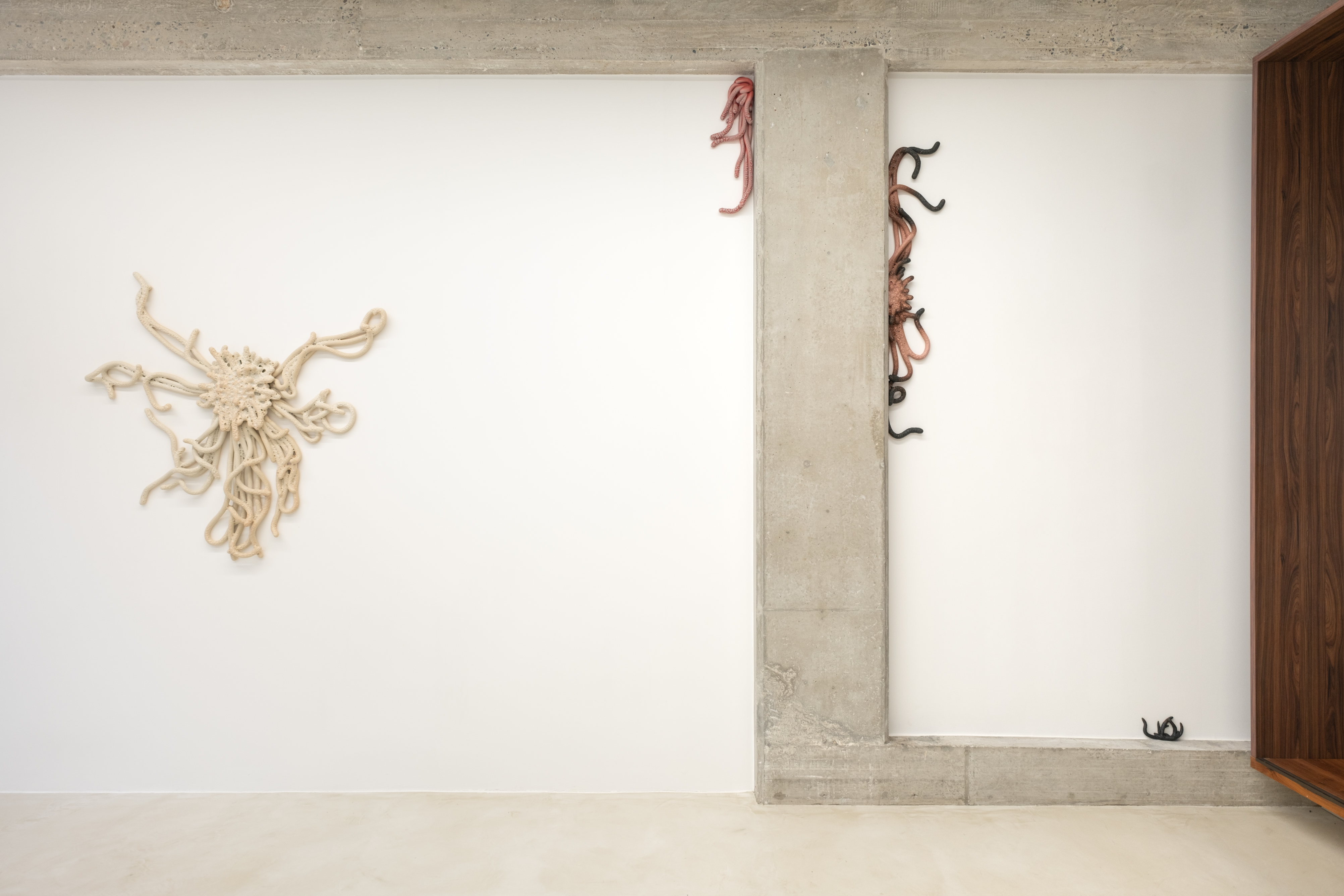
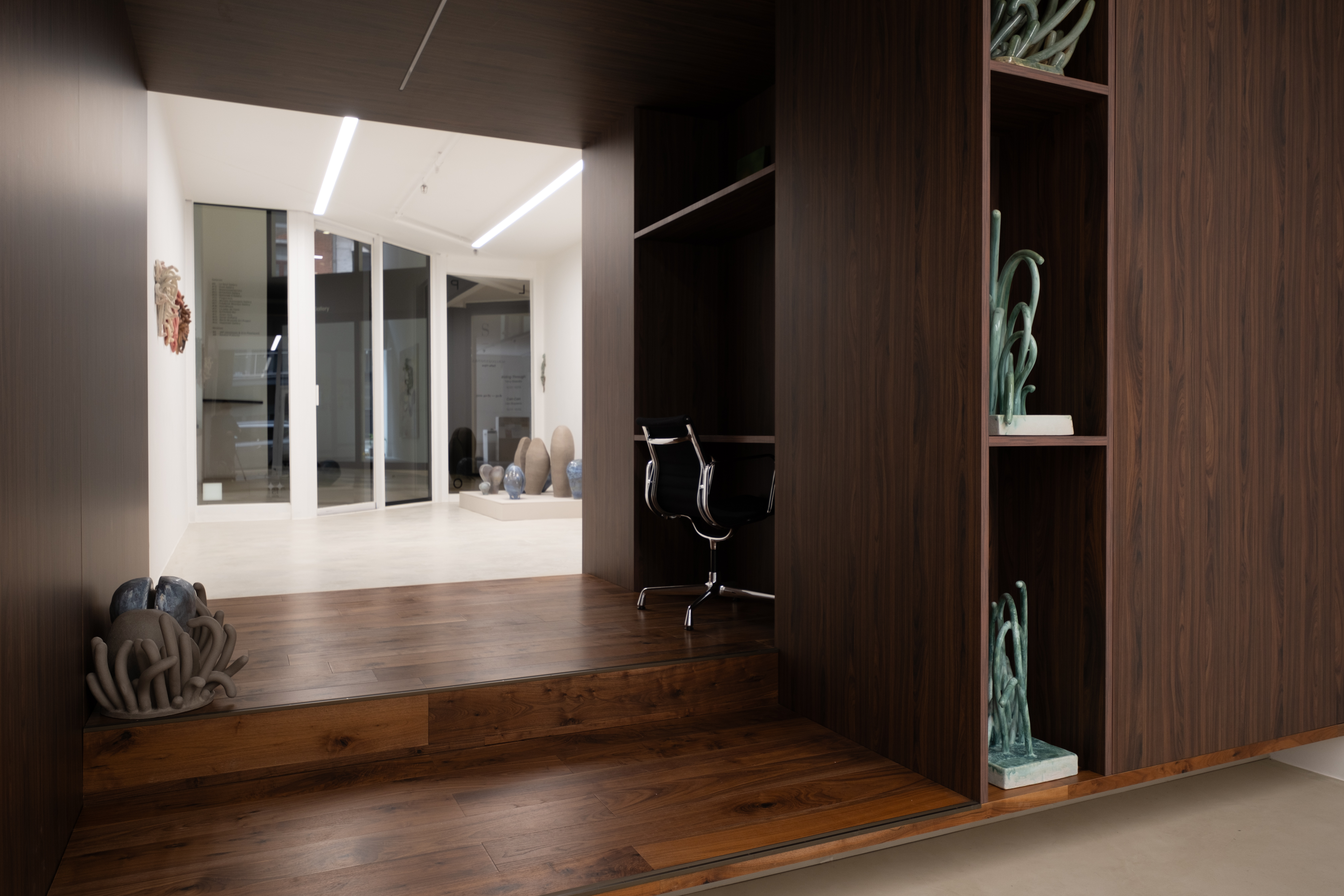
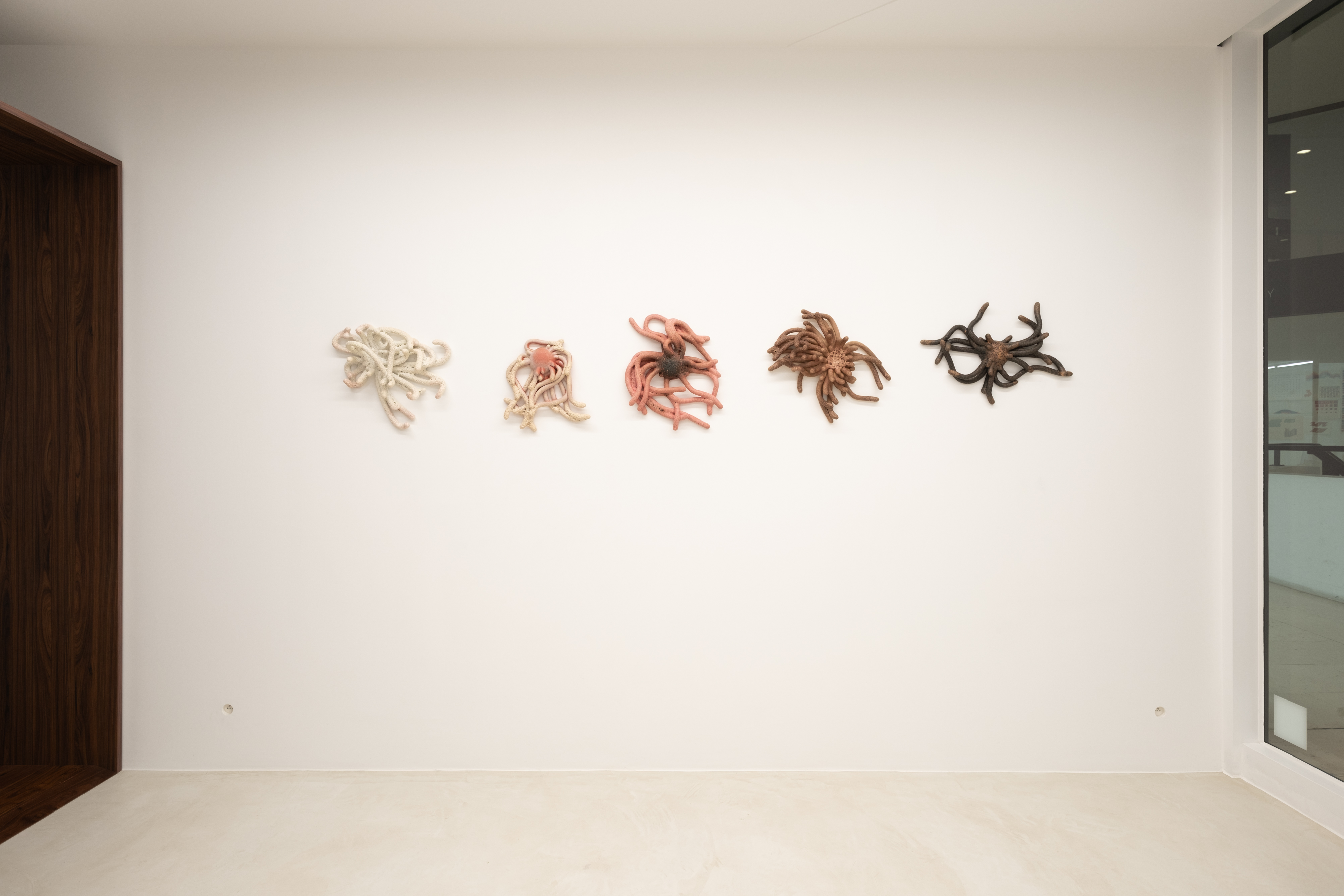
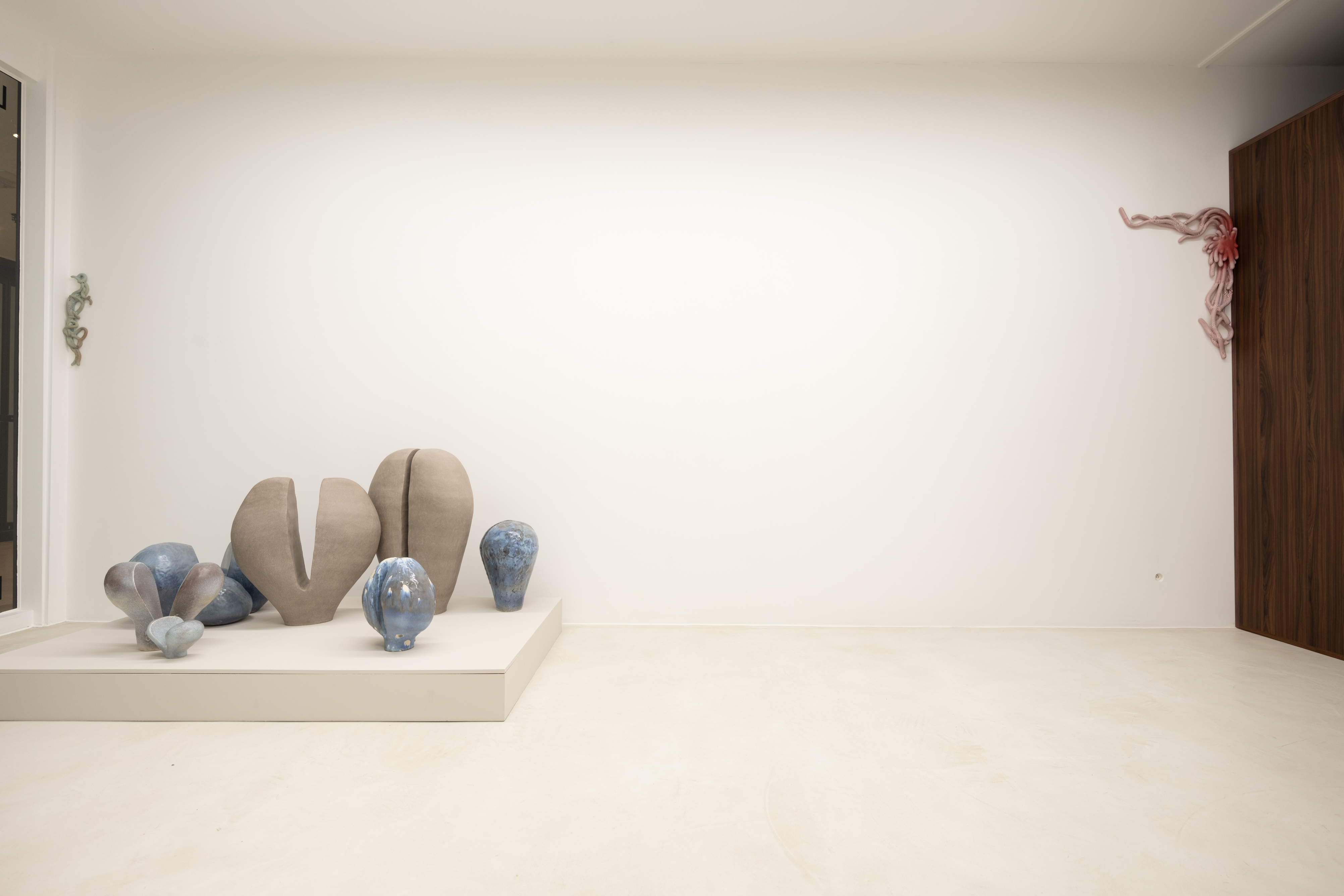
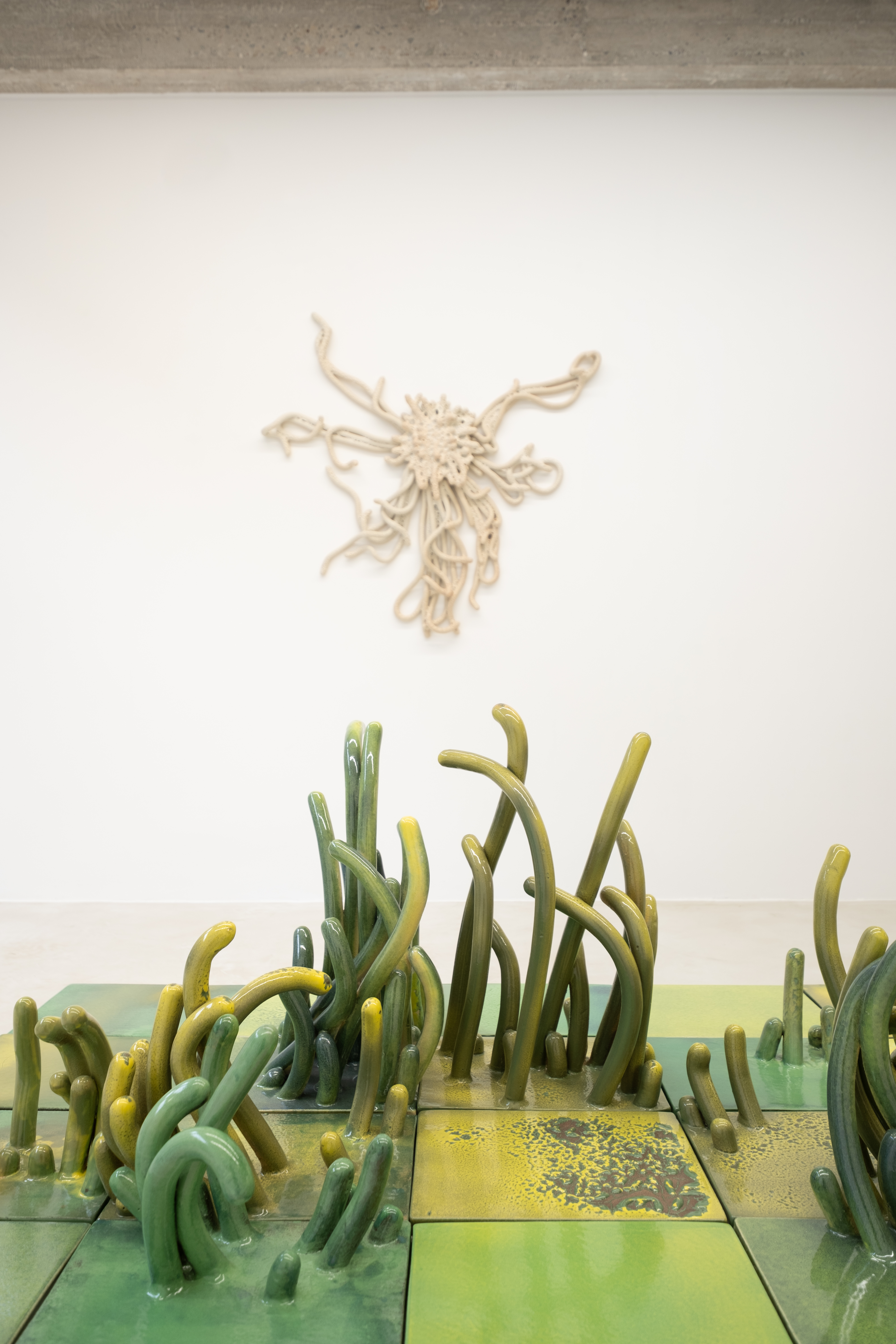
With each of Safia Hijos’s projects and exhibitions, it is striking to see the extent to which her work engages the space, through the proliferation on the floor, on plinths and furniture, on walls and even in the corners of rooms, of her ceramic modules with their plant-like appearance, which attach themselves to surfaces and walls, climb on them, or seem to spill out or hang from them, like plants that are willingly capricious and wild. We like to think of it as an allegory of plant resistance in the face of various human adversities. Dans les chambres, l’herbe pousse sang * in spring 2023, his previous exhibition at La peau de l’ours, which seemed to evoke the possibility of a miraculous and fantastical transformation of the gallery into a space vegetated by invasive and luxuriant plants, like the plants that grow in the cracks in the tarmac and at the foot of building facades, and which give us hope for a time of ecological resistance and resilience despite all the damage that human occupations and actions can produce. However, the formal, chromatic and material reality of Safia Hijos’s ceramics precludes any such hypothesis, so much so does she play with hybrid and potentially grotesque aspects in her creative processes. Her ‘herbs’, for example, had peculiar tubular shapes that looked very unnatural, as do her Medusas and stoneware pavements, whose configurations are the result of the use of an extruder, a machine that stretches and cuts the material into more or less fine strands. Once assembled, they mimic the growth of vegetation, while being adorned with colours that betray the artificiality of their nature: cameos of green, yellow and blue, intense black, pink and white, even a green that could be described as Guimard, in reference to the pioneering work in iron by the Art Nouveau architect. In fact, Safia Hijos’ works and exhibitions seem to perform nature, rather than represent and idealise it, resonating with ornamental vegetation in Art Nouveau, as well as with the ancient hybridisations of Grotesque art, revived in Italian palaces during the Renaissance, where plant, human, animal and mythological motifs intermingle. Safia Hijos’s Medusas can thus engage in a dialogue with these ancient sources, facilitated by the strangely seductive and potentially disturbing aspect of certain plants from the succulent family that the artist has taken as the inspiration for this new ensemble.
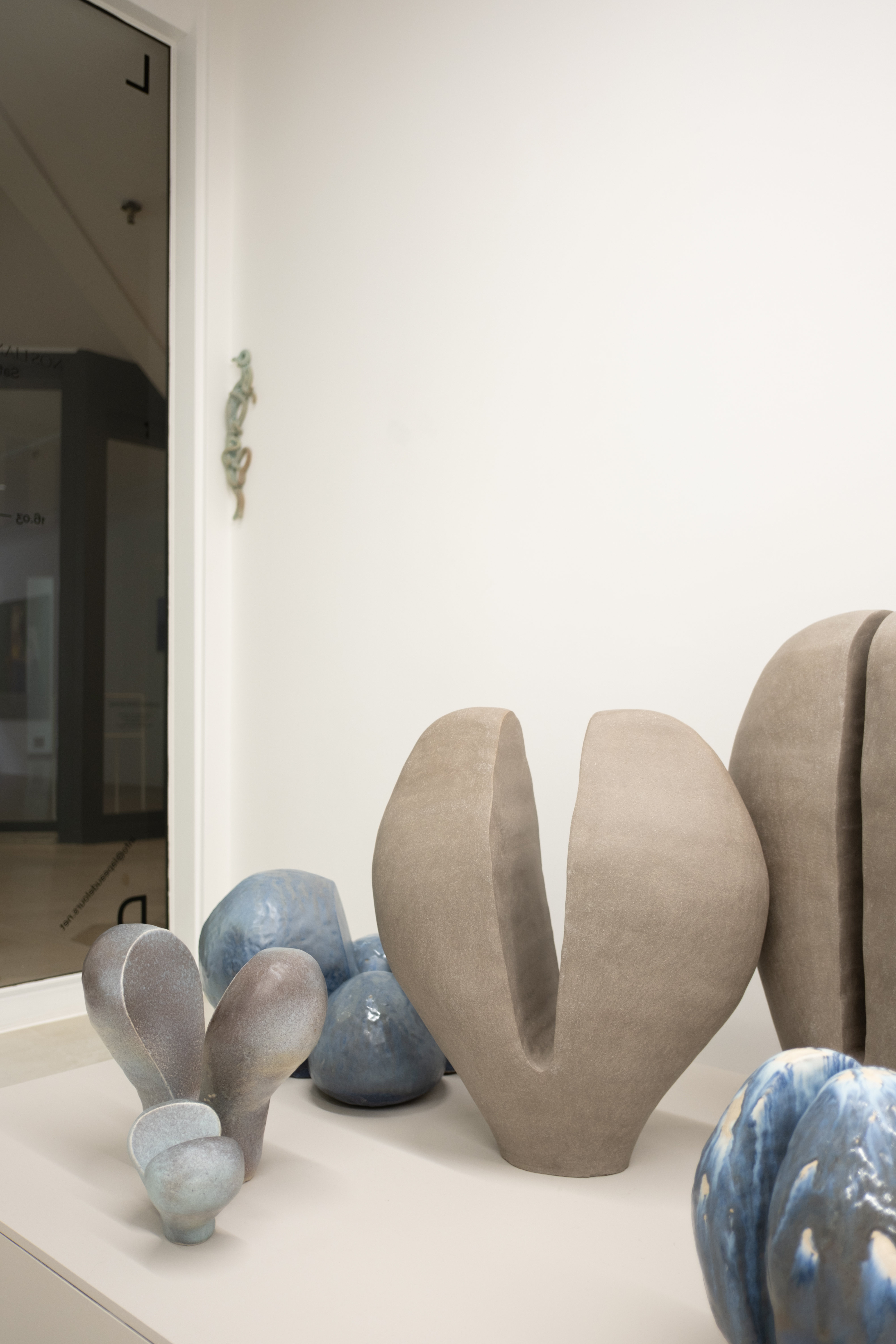
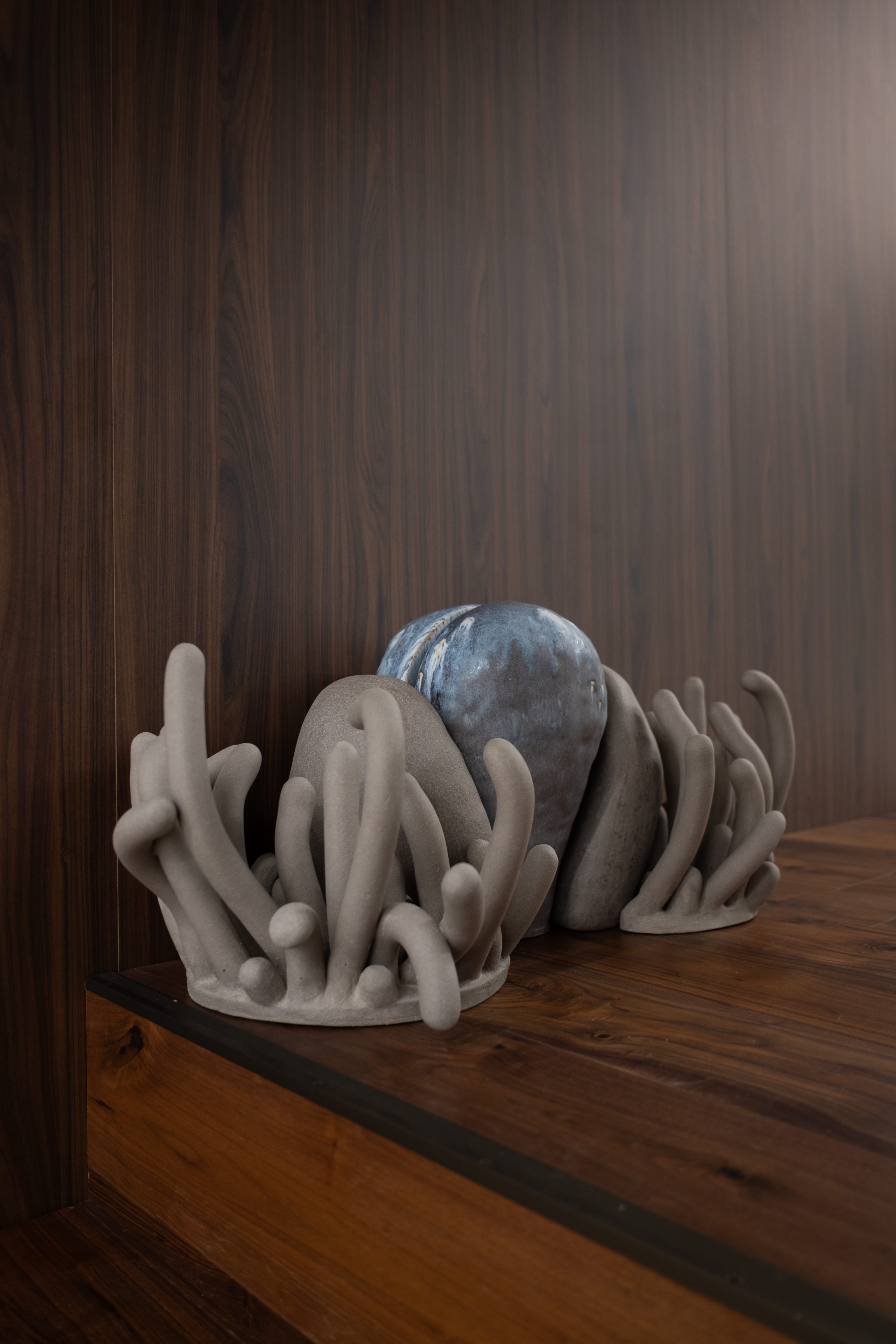
Along the way, other resonances are revealed, with the disquieting strangeness so dear to the Surrealists, when Safia Hijos pays tribute to the Brazilian artist Maria Martins (1894-1973), whose Prometheus (or Burning of that which burns), a bronze sculpture dating from 1948, inspired in particular by Amazonian lianas and discovered during the recent exhibition devoted to the centenary of Surrealism at the Georges Pompidou Centre in Paris, echoes the formal developments of the latest ceramics. Like cacti and lianas, succulents nourish in Safia Hijos a potential for strangeness and fantasy in the perception we can have of them and the imaginations that can unfold, as another recent group of works testifies, Plantes-cailloux (pebble-plants), which are more composite and sculptural, and evoke certain aspects of the biomorphic abstract sculpture of the 1930s-50s (think of the sculptures of Hans Arp or Alicia Penalba). It is no coincidence, then, that she was recently invited to create specific works for a group exhibition (Genius Loci, June 2024) in a bubble-house typical of the organic architecture of the 1970s, the Maison Bernard, designed by Antti Lovag in Théoule-sur-Mer, in the south of France. This architecture, which was both futuristic and alternative (compared with the canons of modernist architecture), also performed nature, or an idea of nature, through the use of curved forms that adapted to the lay of the land and inspired, in particular, the counter-cultural Barbapapa house in the television culture of the 1970s and 1980s. Safia Hijos’ approach is therefore based on a variety of cultural registers, both popular and distinguished, recent and ancient. From exhibition to exhibition, she cultivates and deploys a beautiful and singular playful poetics of forms and creative processes.
Tristan Trémeau
* Dans la chambre, l’herbe pousse is a quote from Claude Nougaro’s song Bidonville (1965). Safia Hijos likes to use evocative song lyrics to title her exhibitions. This time, Nos lianes infinies is taken from the song Dehors by Alain Bashung (1998).