Ninfa Fluida
Past
14 January – 2 March
About the exhibition
"Whatever civilisation it is born into, whatever beliefs, motives, thoughts or ceremonies it surrounds itself with, and even when it seems dedicated to something else, from Lascaux to the present day, pure or impure, figurative or not, painting never celebrates any other enigma other than visibility".
(Maurice Merleau-Ponty, L'œil et l'esprit, Paris, Gallimard, 1964)
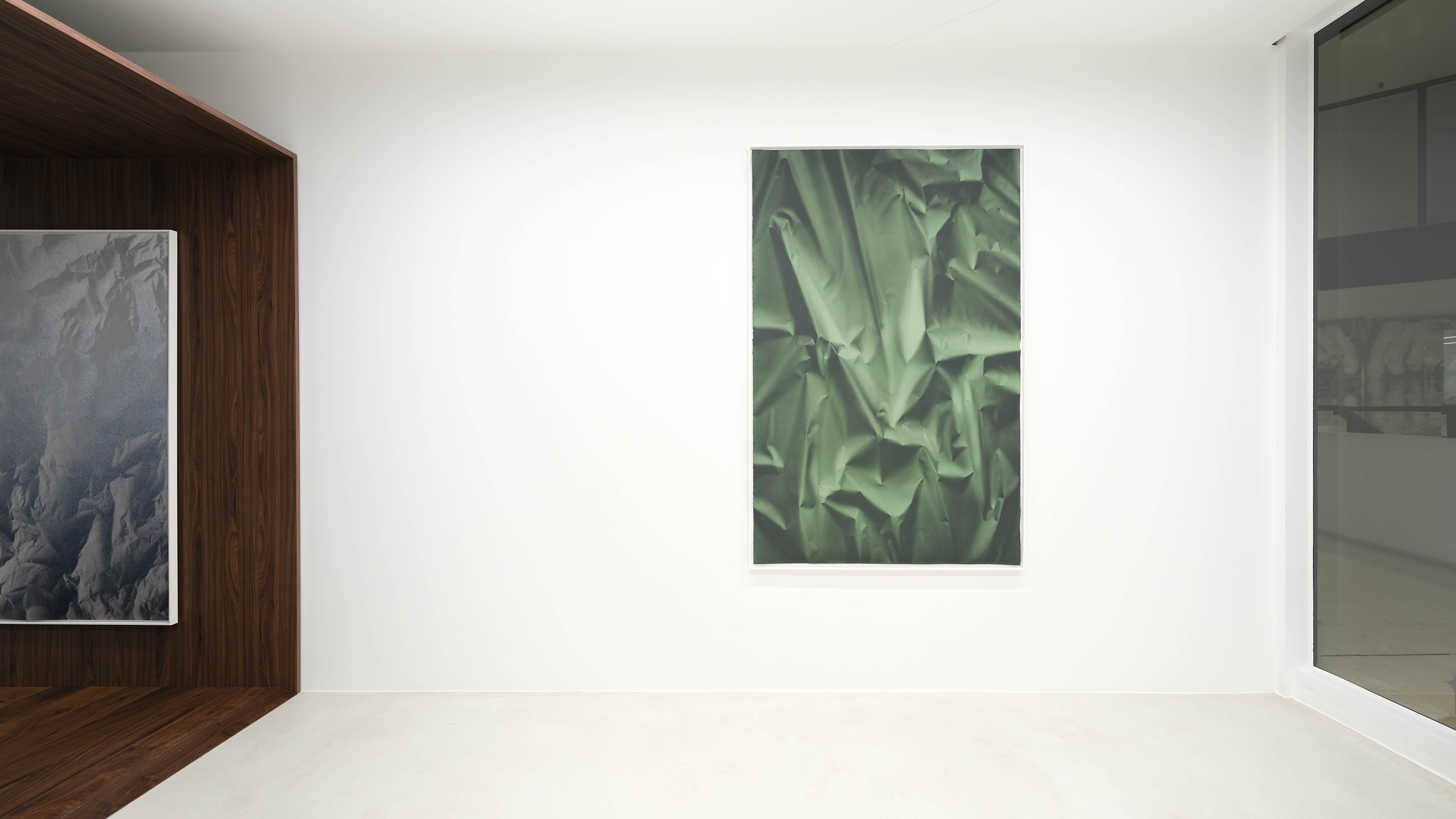
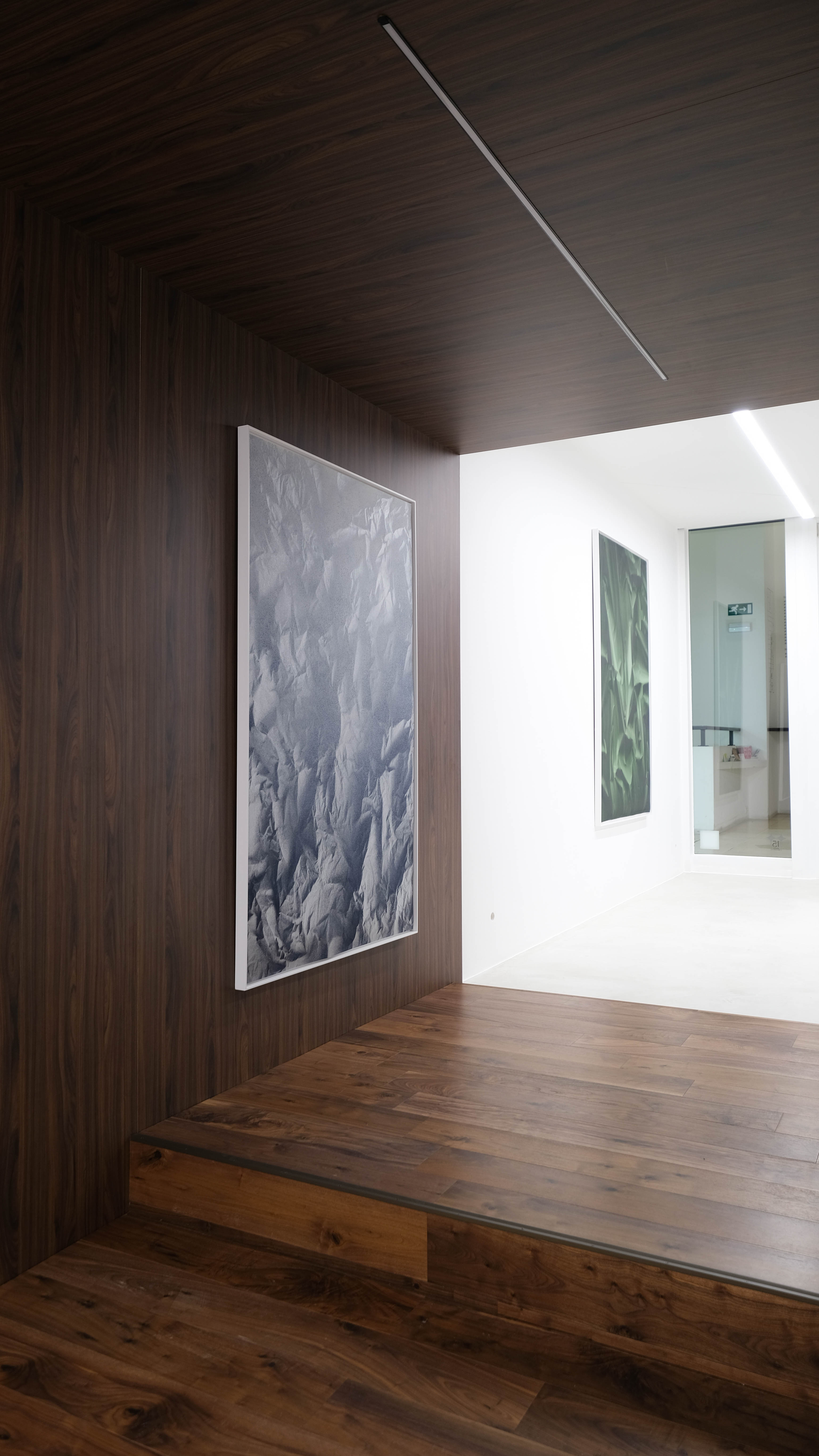
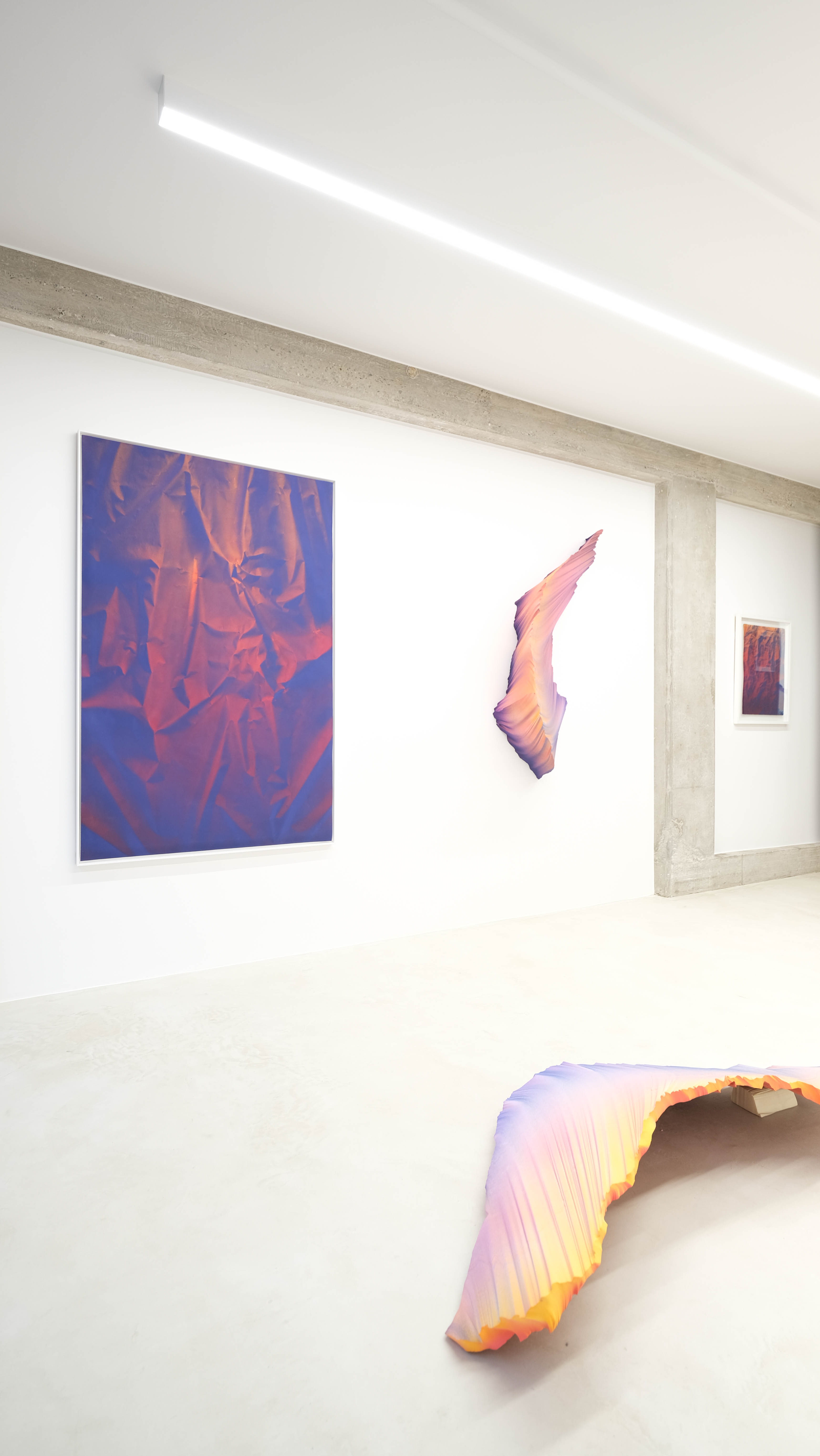
During my first visit to Benjamin Ottoz's studio, we shared a common madeleine: the poetic flavour and sensory acuity of French philosopher Maurice Merleau-Ponty's phenomenological writings on painting, on the experience of vision from the point of view of both the painter and the viewer, on the enigma of visibility and on the tactile aspect of the approach to the visible. It is obvious that Ottoz's painting is a visual enigma. At first glance, the graphic brilliance or chromatic fluidity of the folded motifs, like mineral or crystalline ensembles or sensual, wet draperies, seems to impose an image effect. This effect is then thwarted by the ocular enquiry we make as we approach the surfaces, scrutinising them in minute detail, from a distance, up close, from the front, from an angle... Then the powdery effect of the sprayed acrylic is revealed, the reserves of the paper are punctually appearing, and the dramatic relationships of contrast and relief perceived from afar fade into the gradations of tone and the flatness of the surface.
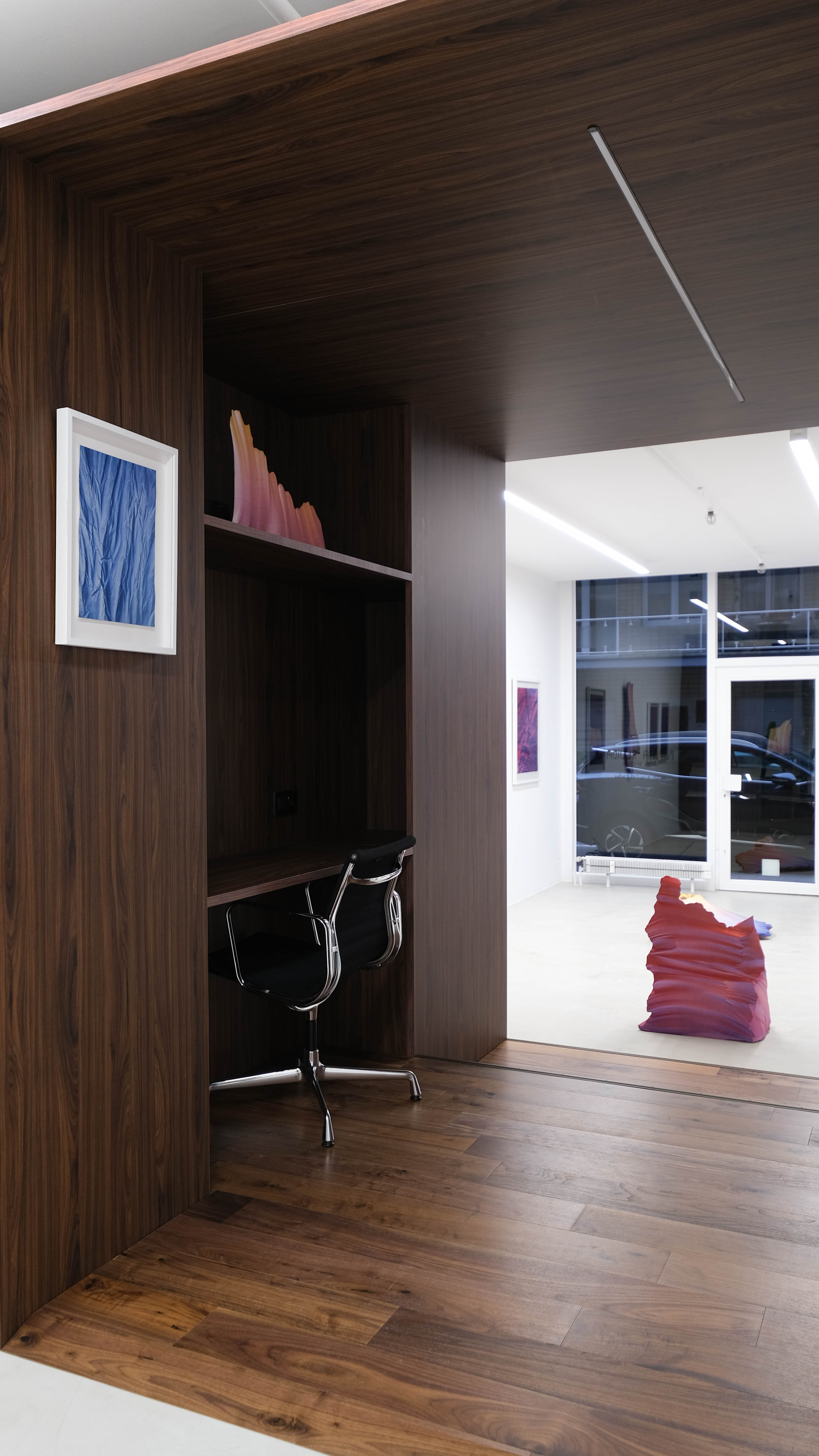
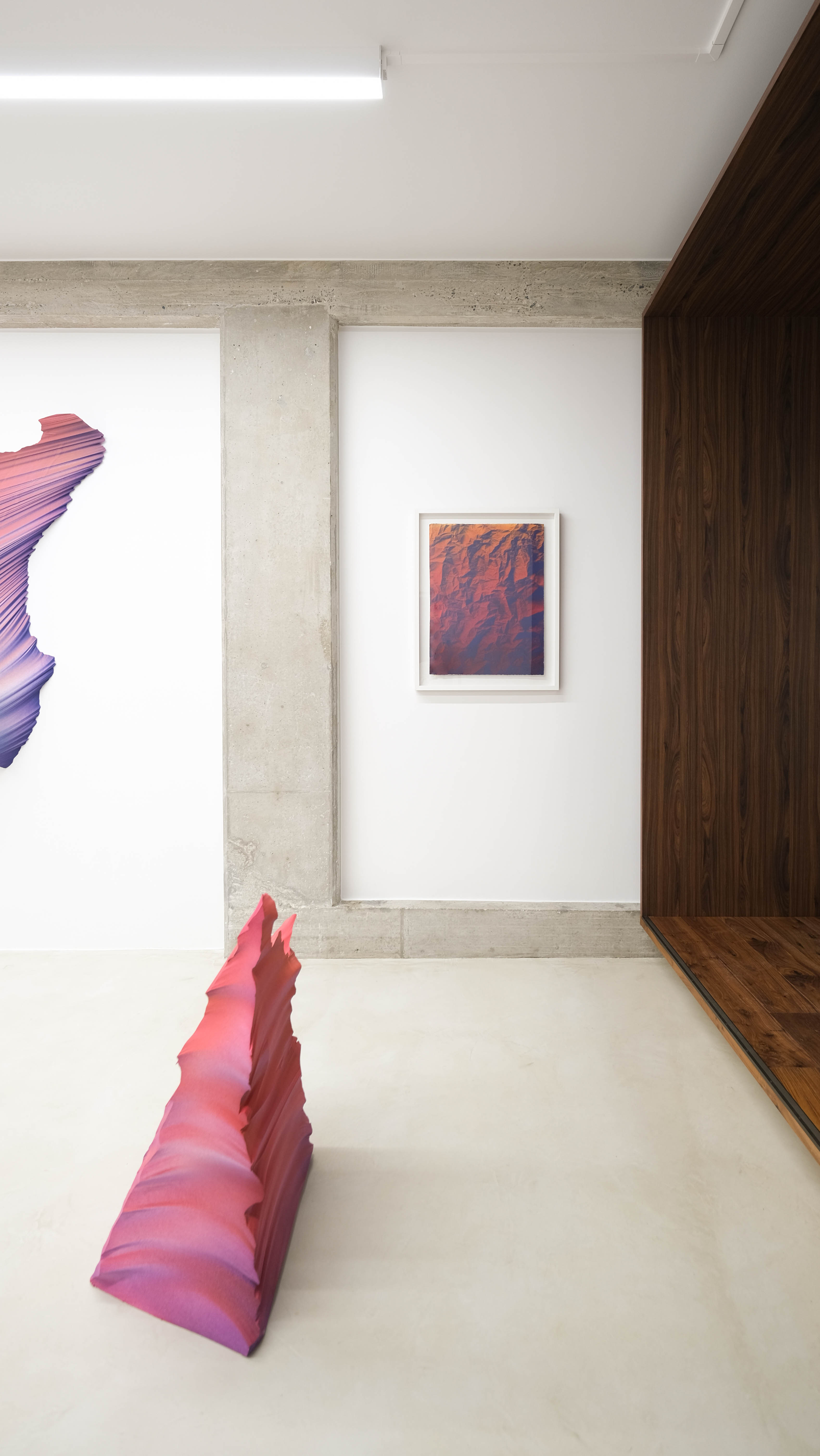
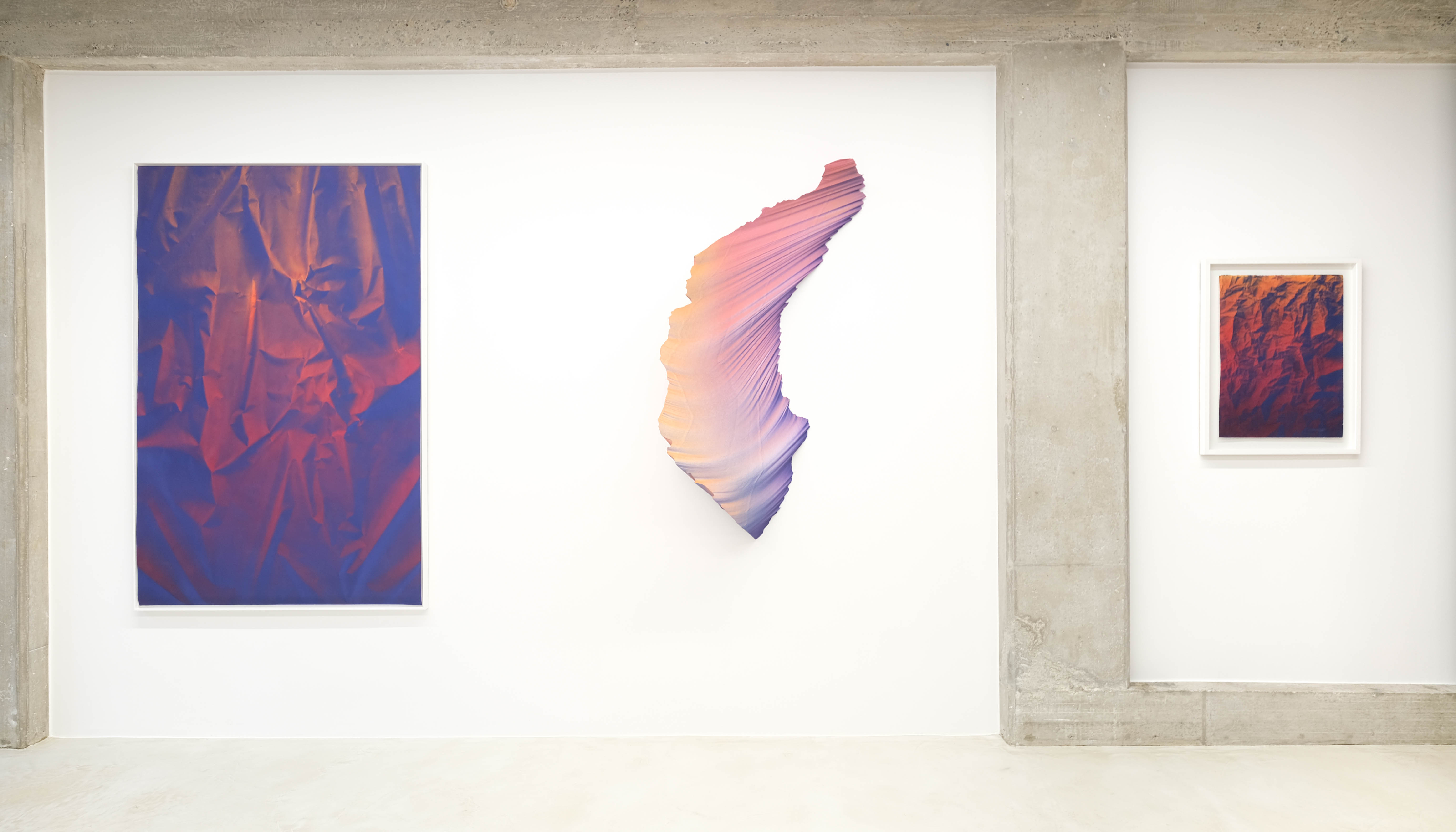
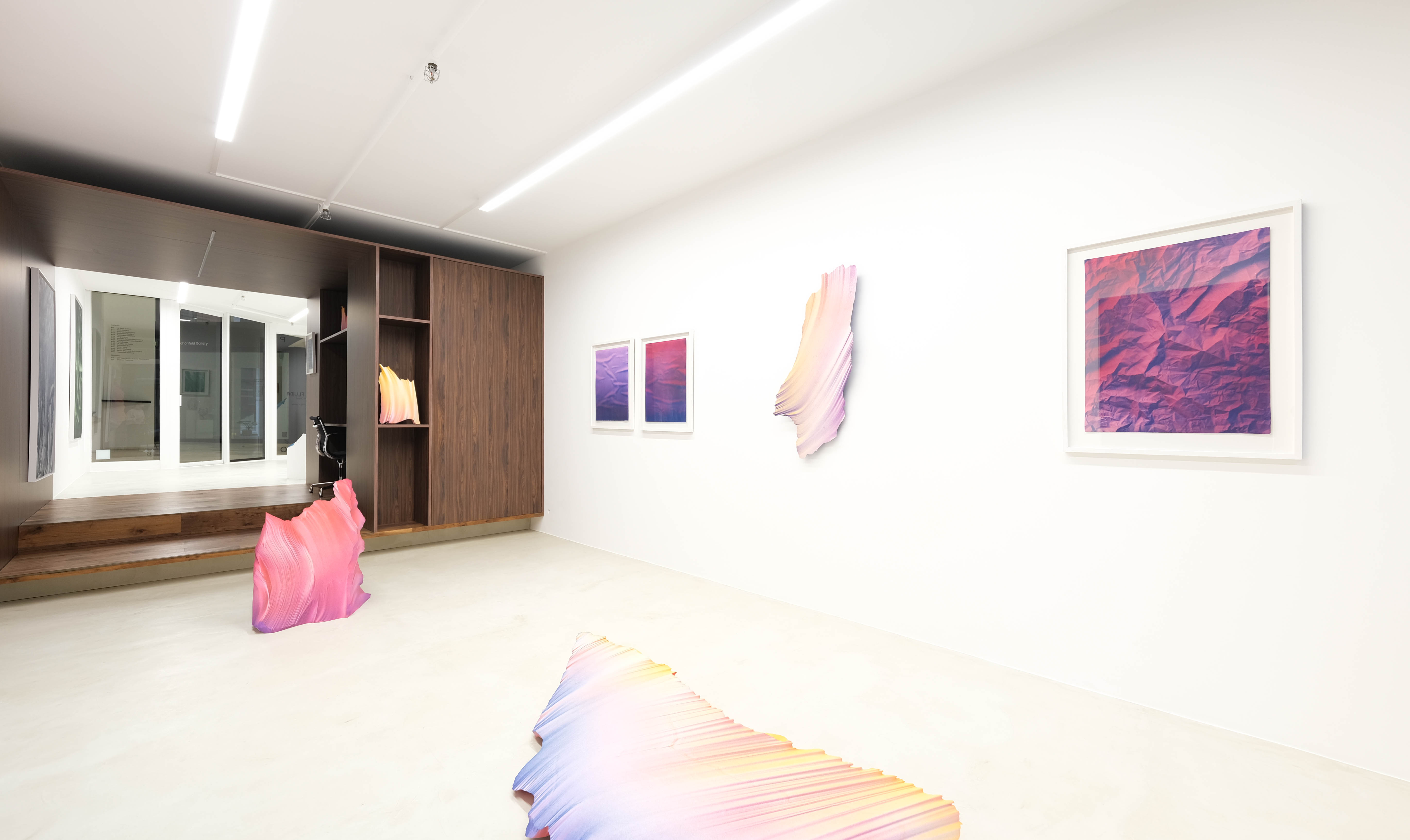
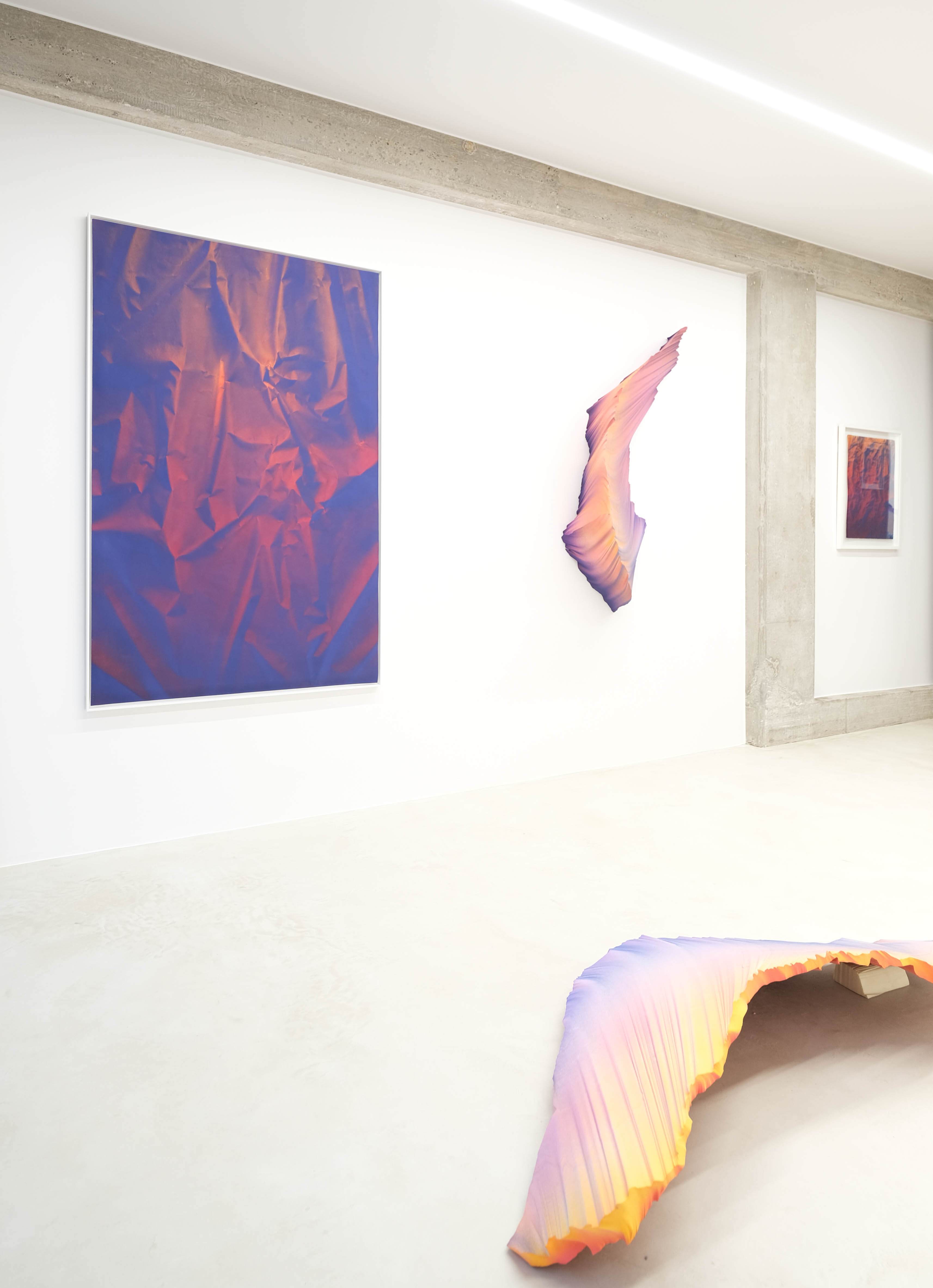
While the quality of the paintings on paper is gradually revealed to the eye, there is still some confusion regarding the identity of what we are perceiving. The workmanship of the paintings, and the optical experience we have of them, up close and from afar, from the front and from the side, are as much about painting as they are about prints and sculpture. The motif of folds has a lot to do with it. Not so much the motif in the sense of a represented subject as in the sense of what has motivated all Ottoz's work over the last ten years and a studio accident: to recognise, grasp and extend what chance had worked as a pictorial miracle, when paint sprayed on a sculpture had spilled over onto a crumpled support, which, once flattened and taped to the wall, had imposed itself on the artist as a veritable epiphany. From being a spectator of this pictorial event, Benjamin Ottoz has become the operator of its deployment in his sets of paintings since 2014, experimenting with different ways of modelling and sculpting the surface of the textured paper, from crumpled to curled, and now including a mixture of these two manipulations of the support, as well as different angles, frontal and lateral, for spraying the paint onto the reliefs. The operation of flattening the relief by marouflage, which completes each production process in the form of works, is the decisive moment that ultimately causes optical confusion - which is also a sensual delight - in the very identification of the medium for viewers. The flattening out of the relief, accompanied by the blurring of contrasts due to the pulverisation of the paint (and therefore its volatility), produces an impression, transfer or revelation effect that is more reminiscent of printmaking (e.g. the monotype) or photographic processes with or without cameras (e.g. the photogram) than of painting.
This is where the exciting paradox of this painting lies: while all the processes involved in producing the form of the paintings are visible, and the latter can be seen as visual documents of their creative process (from the manipulation of the support to its levelling, via the spraying of the paint), their immanent qualities would almost lead us to believe in their acheiropoietic dimensions - literally "not made by the hand of man", i.e. miraculous. Here we touch on one of the great mythical aspirations of many painters: to be the operator and first spectator of a visual event of a vision that escapes them in part and at whose service they place themselves. It's not for nothing that during our discussions in his studio, Benjamin Ottoz evoked Claude Monet and Eugène Leroy, two painters who aspired to live painting like a garden, or better still, a humus. As the Ukrainian Futurist poet and painter David Bourliouk delightfully put it in 1913, in reference to Monet's Cathedrals of Rouen (a major inspiration for Ottoz's work): "There, close by, under the glass, grew mosses, mosses delicately coloured in subtle shades of orange, lilac, yellow; it seemed (and was in fact so) that the colour had the roots of their fibrils - fibrils that stretched upwards from the canvas, exquisite and aromatic."
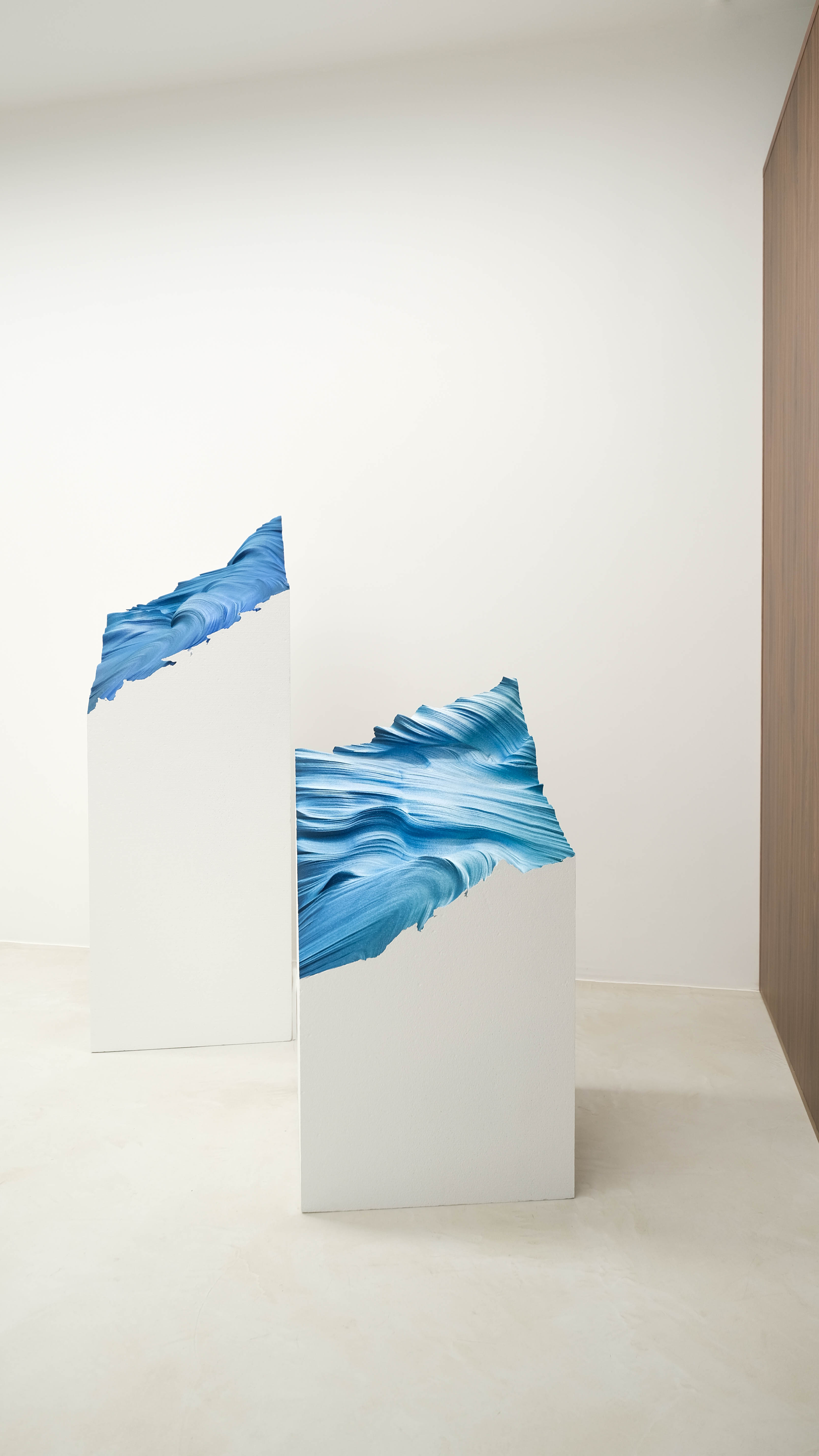
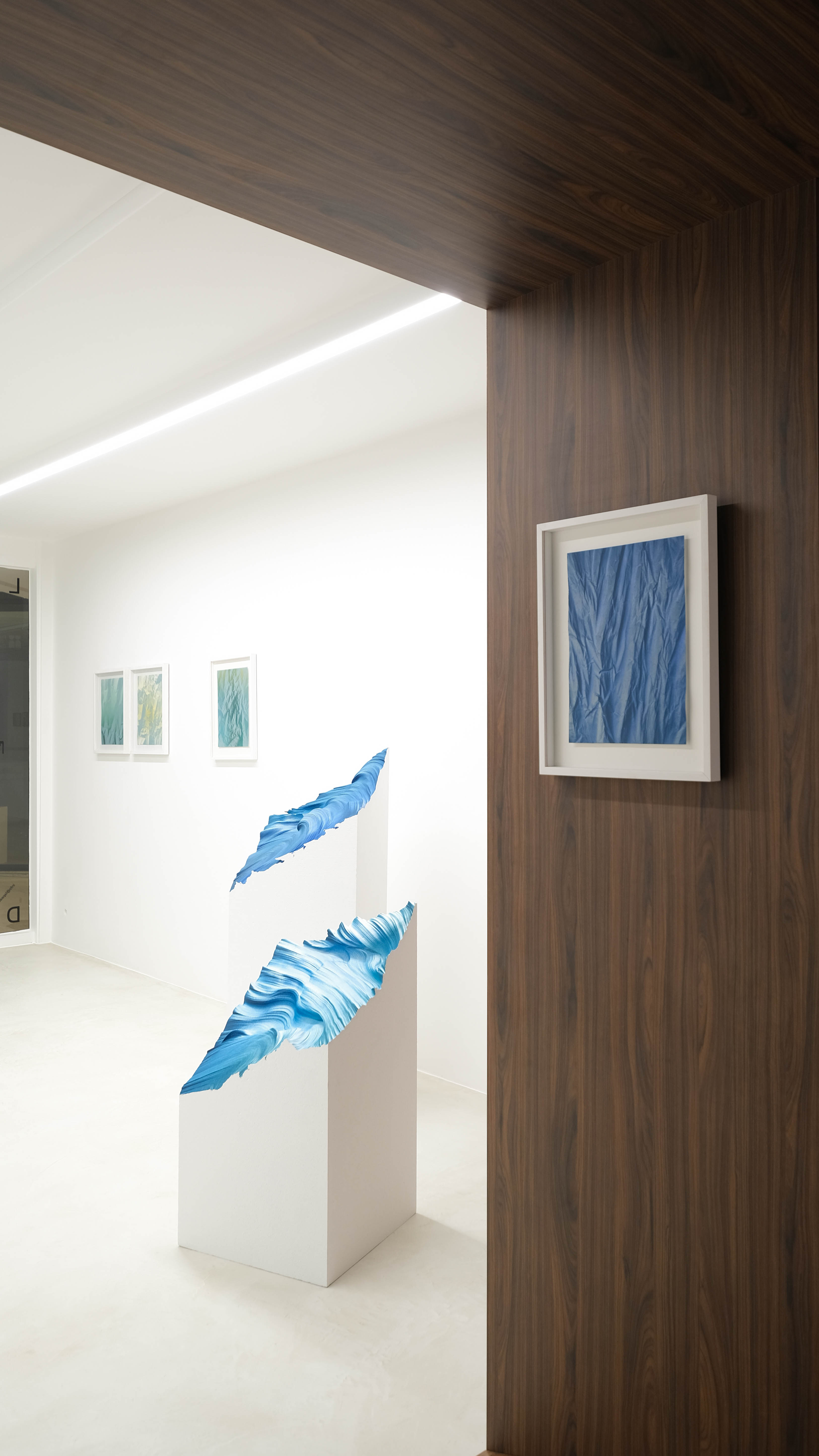
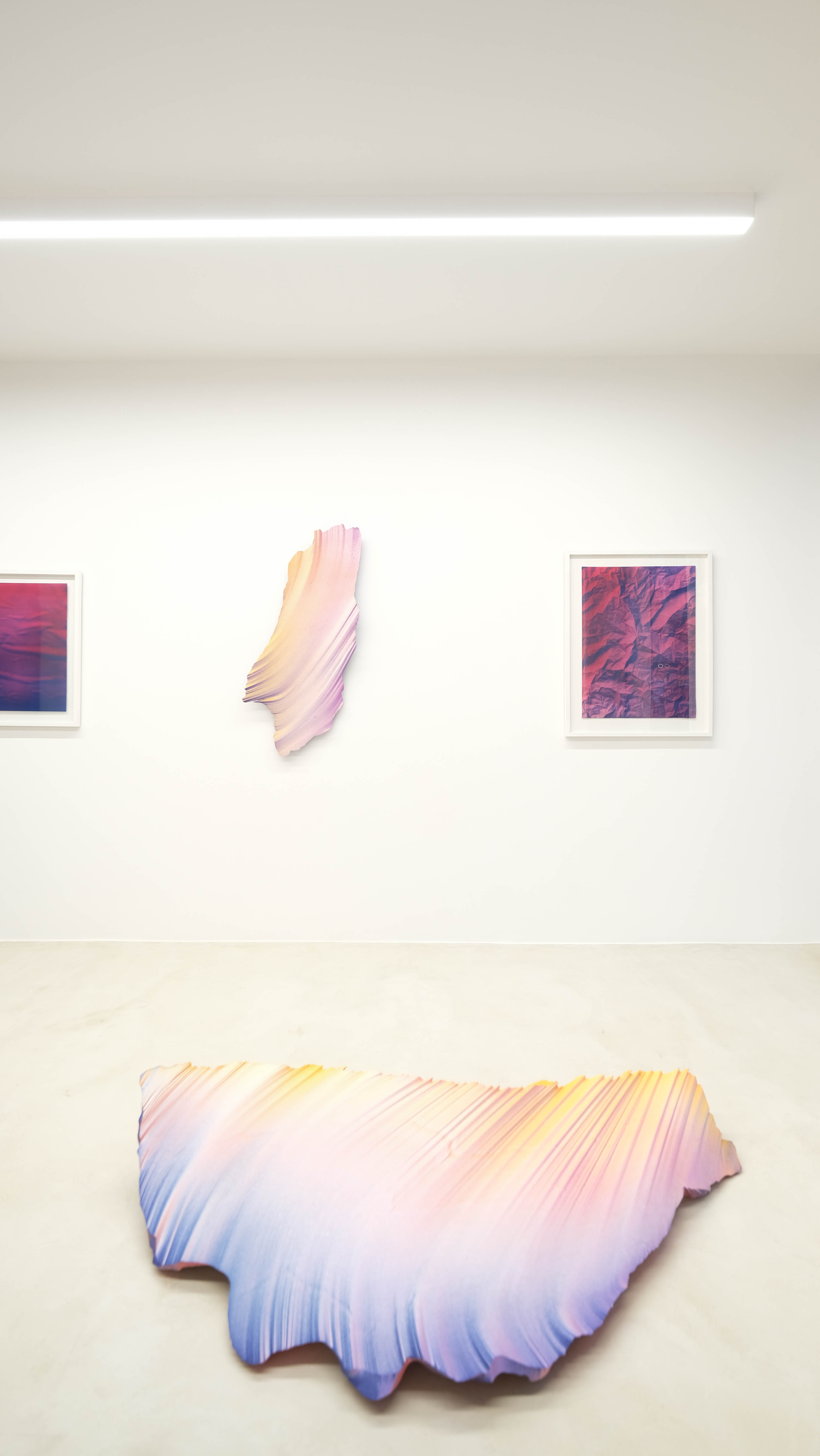
Of course, Benjamin Ottoz's works bear no relation to those of Claude Monet and Eugène Leroy in terms of style, but he is driven by the same spirit of welcoming, recognising and accompanying the pictorial event*. Initially monochrome, then two-tone, his paintings are now presented as polychrome, in the continuity of the paintings on stone (Fragments), exhibited in 2022 at the Galerie La peau de l'ours (Pierre Papier Peinture). This increases the chromatic complexity and haptic qualities of the pictorial effects that inhabit the pre-folded surfaces, between adventurous chance and protocol-based mastery of the tools. Lastly, in the current exhibition, these latest works on paper are in dialogue with new painted polystyrene volumes which, when cut up and fragmented, evoke and work on other sensory and imaginary dimensions, referring to the experience of landscape and summoning up the memory of Impressionist painting.
What is striking about Benjamin Ottoz's works is their ability to both capture and hold our gaze, to provoke in us a slow and profound reflexive and sensitive maturation of the aesthetic experience they provoke, by virtue of their ambiguity and the sensory disturbance they generate. Faced with these folds that move us with a sensuality, if not an eroticism, of the flows and movements that accompanied the creative processes of the paintings, we are in turn moved and carried by these "movements of desire" or these "effects of generalised fluidification" referred to by the art historian Georges Didi-Huberman in his book Ninfa fluida. Essai sur le drapé désir**, which nourishes the imagination of Ottoz's latest works and this exhibition.
Tristan Trémeau
*Artistic filiations are not just a matter of style, far from it. Leroy, for example, was fascinated by Malevich, who himself admired Monet's Cathedrals and, following Bourliouk, wrote something similar about them.
**The book was published by Gallimard in Paris in 2015.
COLLECT (Winter 23-24)