L’enfance des paysages
06 September – 24 October 2026
Artists
Dorian Cohen
About the exhibition
L'enfance des paysages
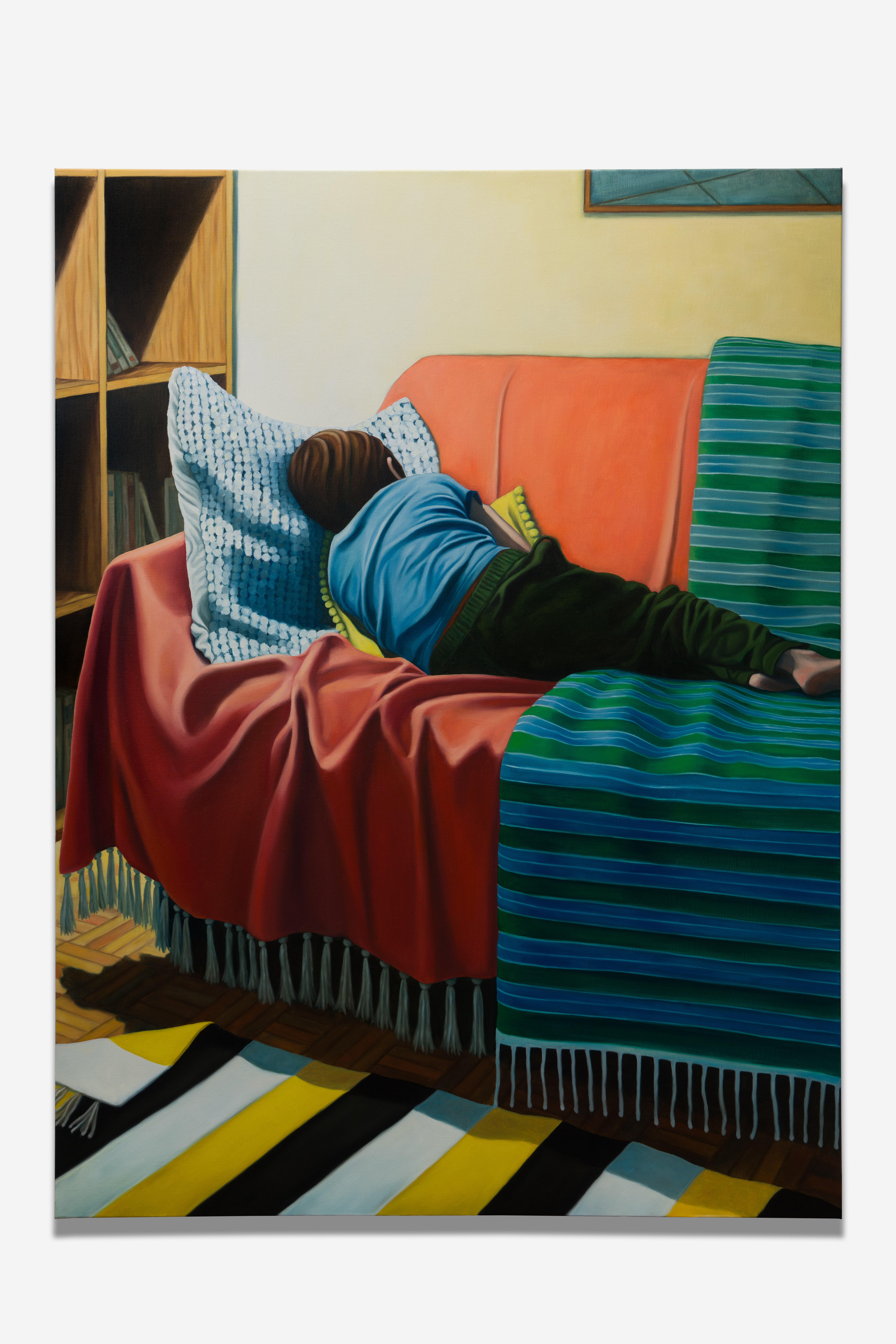
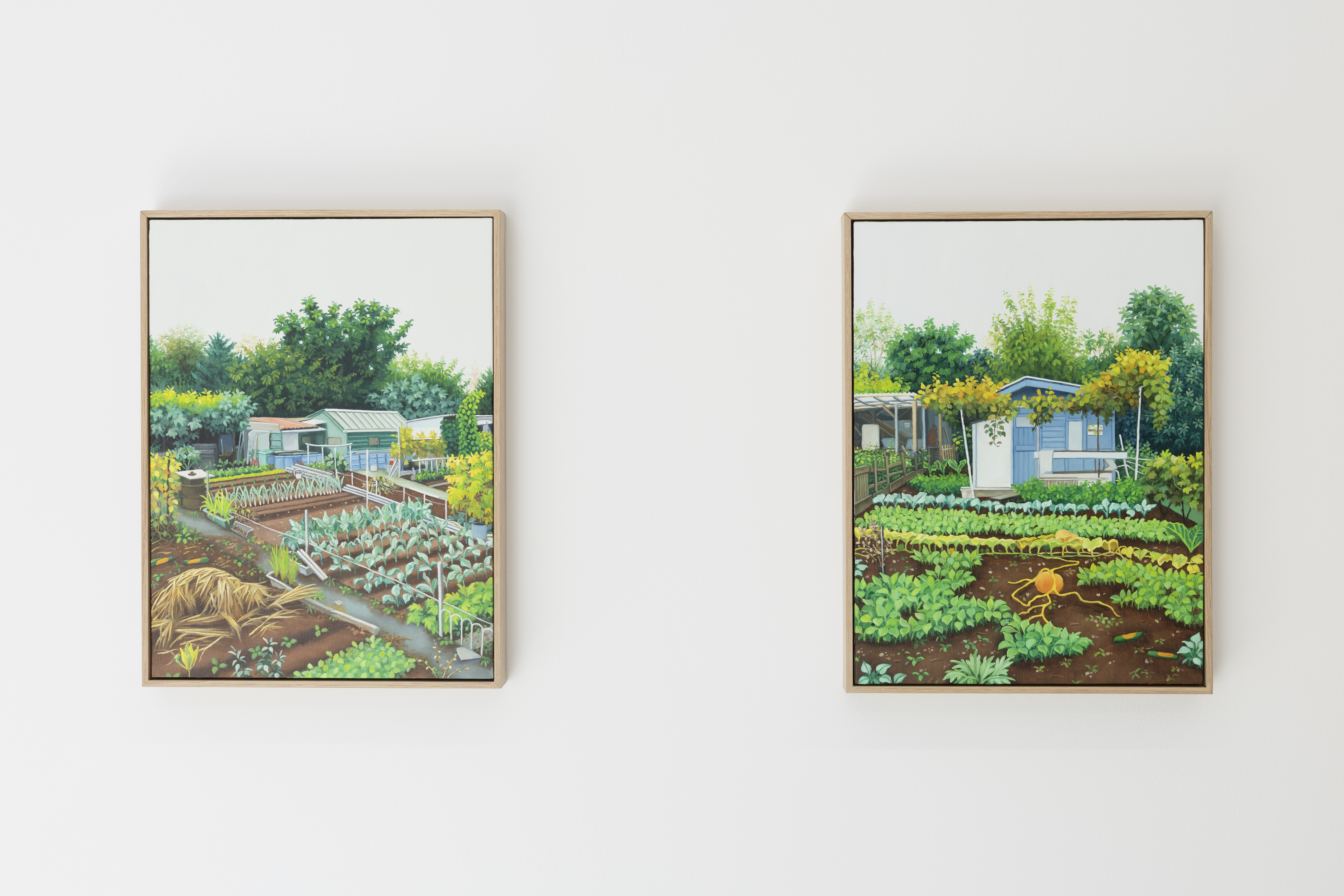
Through a selection of recent paintings, Dorian Cohen brings two images of children into poetic dialogue with a series of garden landscapes, each imbued with a rich symbolic imagination in which memories and sensations unfold as an extended allegory.
Childhood is a recurring theme in Cohen’s exploration of intimate experience and the formation of perception. Drawing on the foundations of naturalism, its attention to the human figure in the raw, social reality of everyday life, and to the vulnerabilities that lie beneath it, the two portraits presented here also reveal the growing influence of cinematic imagery on his practice.
Despite their backlighting and chiaroscuro effects, both paintings are imbued with a striking clarity of light. Their compositions unfold through a succession of planes, while the use of colour establishes an atmosphere distinctly evocative of cinema. Asleep and curled into himself, or dreamy and contemplative, the child is portrayed with a quiet, subdued melancholy.
The narrative ambiguity of these works lies in the very paradox of their making. Cohen asks his models to pose, reconstructing the settings and shaping the light according to his own vision, yet the finished paintings retain the immediacy of a scene glimpsed in passing, a moment seemingly captured from life. The choice of subject thus becomes a genuine narrative gesture: that of a child so deeply moved by the landscape that he is almost intoxicated by it, gradually surrendering to sleep.
A series of garden paintings accompanies these two portraits. Cohen here continues his long-standing exploration of the urban landscape, begun eleven years ago with a body of work devoted to the community and educational gardens that have gradually taken root in European cities.
The interplay between the vegetal and the mineral, a defining feature of his work, is here distilled into small gardeners’ huts and rainwater barrels set against a lush backdrop of trees and shrubs. The pictorial focus shifts to the architecture of vegetable gardens: vegetables become warm, playful motifs, repeating themselves in orderly rows and competing in their infinite variations of green and bursts of light. Here and there, shrubs temper and harmonise the composition. Buckets, spades, brightly coloured sheds, small stakes and pumpkins, scattered throughout by the gardeners, complete this childlike and playful score.
A little further on, the garden becomes the childhood of the wider landscape: in the rose garden of the Albert Kahn Garden, the pale stems of the rose bushes appear to play a game of chance within a geometry infused with humour.
The Childhood of Landscapes? Beyond this visual dialogue between childhood and gardens, Cohen invites us to consider landscape as the embodiment of a way of seeing nurtured since childhood. The garden, perhaps the quintessential image of paradise lost in the Western imagination, becomes the setting for a continuum of sensory, contemplative and social experiences inherited from our earliest encounters with the world. It is here that the spectacle of time regained is played out once more.